
OpenAI says GPT-6 designed proteins that bound their targets in lab tests
OpenAI's GPT-6 protein design produced 322 minibinders and 35 bound their targets in Onava's lab tests. The numbers, and what specialized models still did.
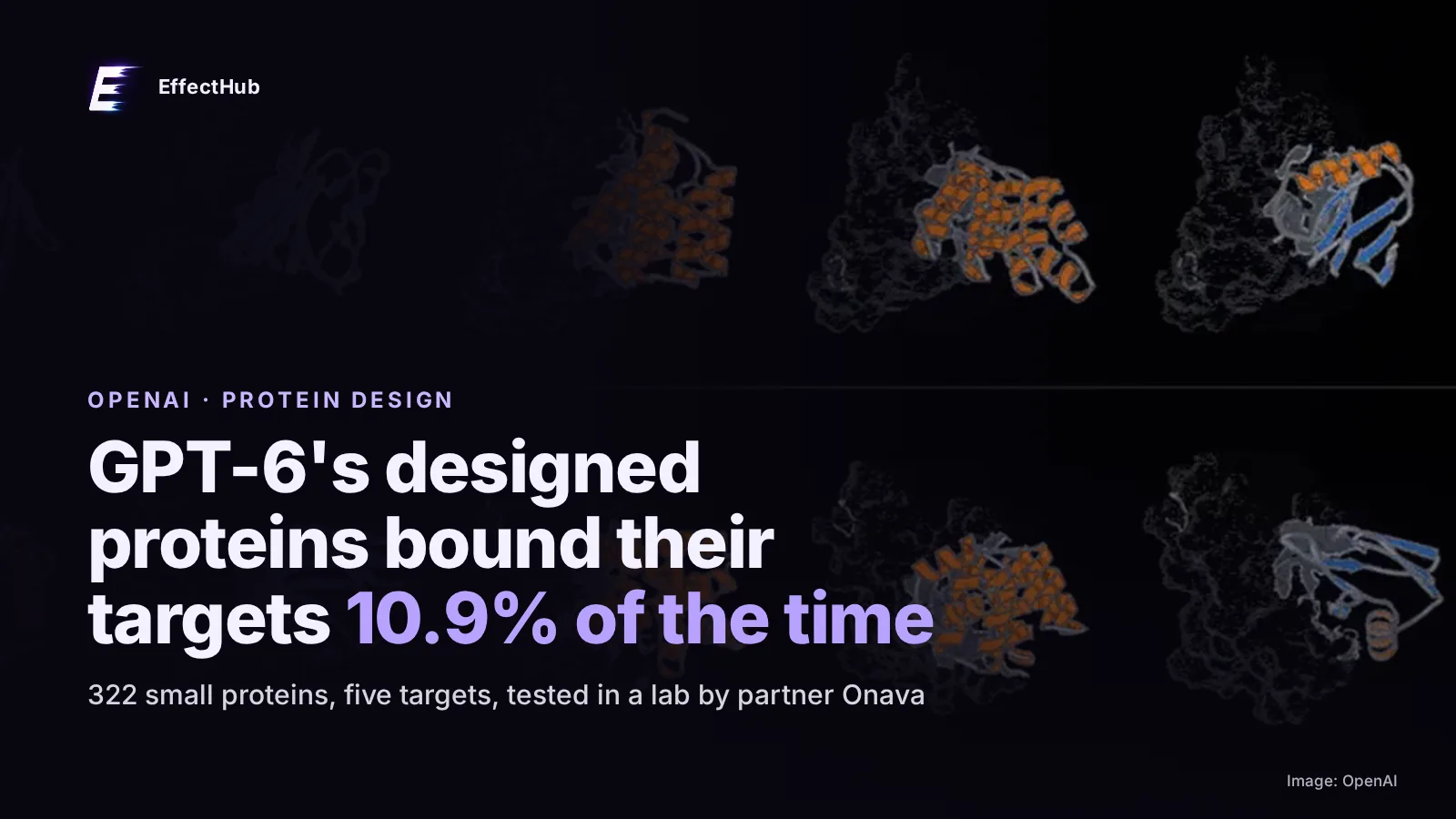
OpenAI published GPT-6 protein design results on November 24, 2026, from a lab campaign run with its partner Onava. Of 322 small proteins built from shapes GPT-6.2 drew, 35 (10.9%) attached to the target they were aimed at, with hits on all five targets. OpenAI says its models produced those designs "without relying on specialized biology models, using only reasoning and general-purpose coding tools".
What the GPT-6 protein design campaign tested
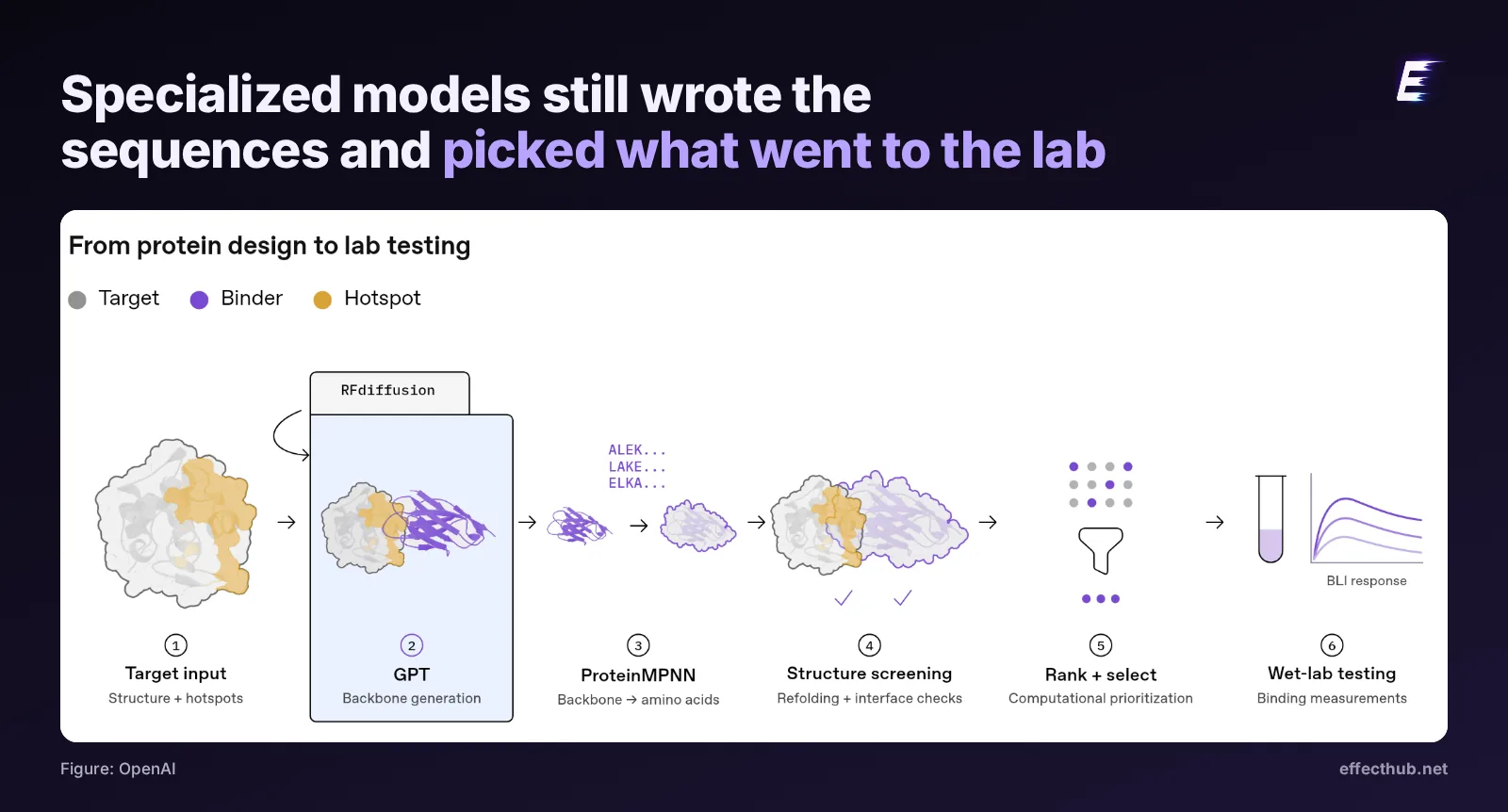
OpenAI handed GPT-6.2 a target protein and the spots on its surface that a drug should touch. The model then drew a small protein, called a minibinder, shaped to clamp onto those spots. A specialized model turned each shape into an amino acid sequence, and Onava made the proteins and measured whether they stuck.
The hits landed unevenly across the five targets:
- IL-17A: 18 hits, the best result of the campaign.
- VEGF-A: 8 hits.
- PD-L1: 5 hits. OpenAI describes it as "a protein some cancers use to evade the immune system".
- IL-7Rα: 3 hits.
- TrkA: 1 hit.
That is 35 out of 322, or 10.9%. Nature, which covered the announcement the same day, rounds it to "around 11%".
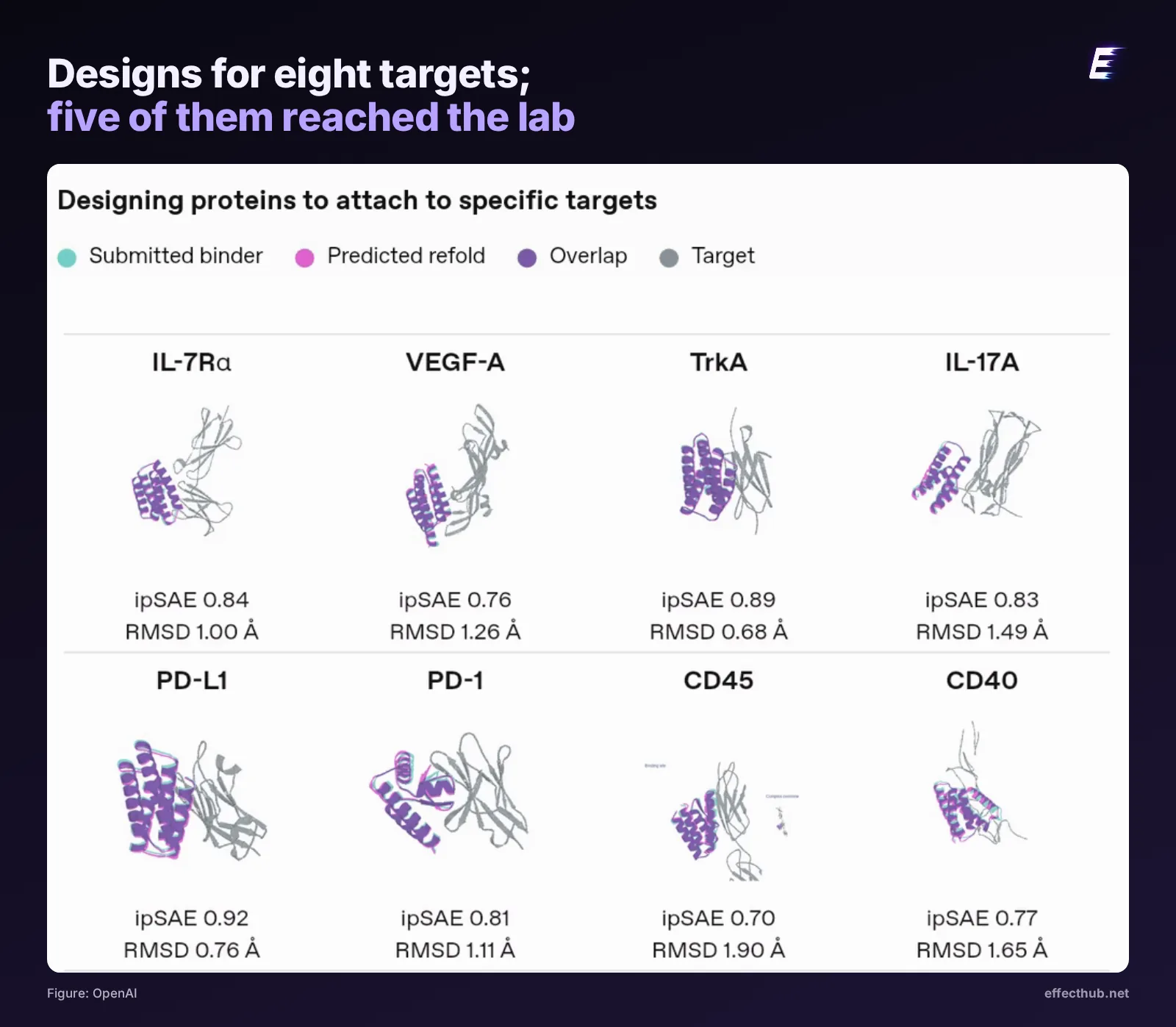
What a minibinder is, and what binding proves
A binder is a small protein made to latch onto one chosen spot on a bigger one. Block the right spot and you can switch a biological signal off, or flag a cell for the immune system. That logic sits behind many modern drugs, so a cheaper way to design binders matters.
Sticking, though, is the easy half. A candidate also has to grab the right protein and nothing else, survive in the body, and change what a cell does. OpenAI says so plainly: "binding is only one step toward a useful research tool or medicine." It reports no testing in animals or people.
Rewriting the loops an antibody grips with
An antibody grips its target with six short loops called CDRs, three on each chain. The single-domain antibodies in this test have three. Swap those loops and you change what the antibody recognizes, so they are the part drug designers rewrite.
OpenAI gave GPT-6.2 six small antibodies aimed at IL-4Rα, minus their loops, and asked for new loop sequences. Of 182 designs tested, 128 (70%) showed signs of binding. In a harder version, the model rewrote about half the amino acids in each of three loops of five therapeutic antibodies. Of 272 fragments, 179 (66%) still bound PD-1 or PD-L1.
Those rates sit far above the minibinder campaign, because the job is different. Rewriting part of a molecule that already works is a smaller step than inventing one from a blank page.
Where GPT-6 protein design matched specialized tools
Two computational results stand out, and both are OpenAI's own measurements.
The first is docking, the task of predicting where a small molecule sits on a protein and which way it faces. On the PoseBusters set, GPT-6.2 matched the experimental position and orientation in 93% of scored predictions, and an unreleased internal model managed 96%. DiffDock-L, a specialized docking model, scored 50%.
The second is motif scaffolding. You fix a working fragment, such as an active site, then build a new protein around it that holds that fragment in place. On MotifBench, 43.7% of the designs OpenAI evaluated from its internal model both kept the motif and refolded into the shape the model had drawn, against 27.8% for RFdiffusion. OpenAI calls that a "preliminary analysis", and no lab work has yet shown those scaffolds do anything.
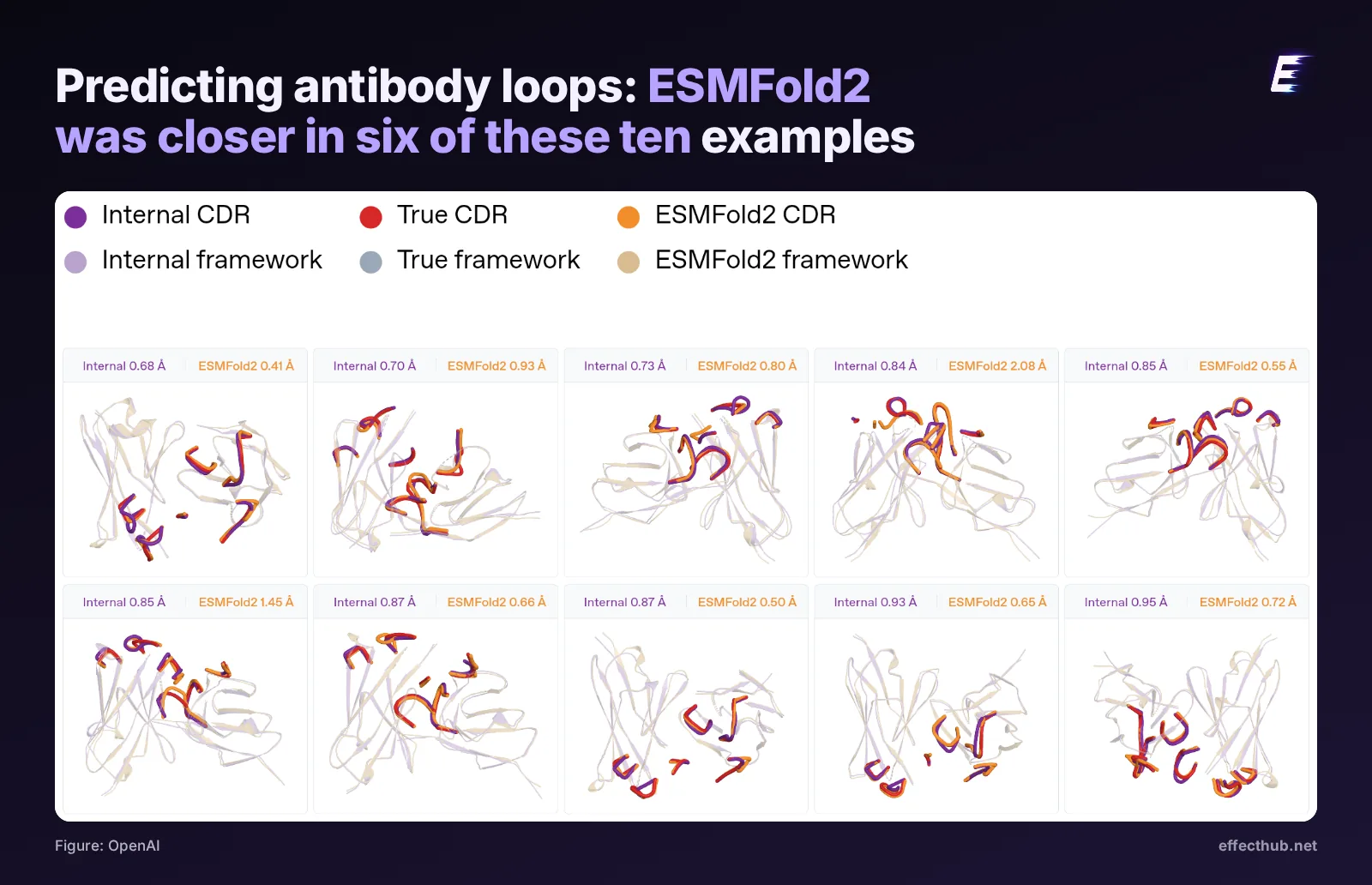
A third test sits between the two. OpenAI cut the CDR loops out of known antibody structures and asked the models to predict them back. Its internal model and ESMFold2 trade places from one example to the next, as the figure below shows.
Specialized models did a large part of the job
Read the limitations section and the picture narrows. "Our protein design campaign relied on specialized structure prediction models such as Boltz-2, OpenDDE, and ESMFold2 to filter candidates," OpenAI writes. The GPT models produced shapes only, so a separate sequence-design model wrote the amino acids: SolubleMPNN for the lab campaign, ProteinMPNN in the pipeline diagram below.
Three more caveats come from OpenAI itself:
- The original RFdiffusion study reported higher hit rates. OpenAI argues rates "depend heavily on how strictly researchers filter designs before lab validation and their definition of binding".
- Predicting a whole protein's structure from its sequence stays far behind specialized tools. OpenAI's chart puts its best internal model at a mean TM-score of 0.38, against 0.93 for ESMFold2. Anything above 0.5 counts as roughly the right fold.
- Unusually high accuracy at inferring sequences from structures "may partly reflect memorization", the company warns.
Its own summary is blunt. The results "do not yet establish that our models can generate de novo minibinders end-to-end in a zero-shot setting without help from specialized models", OpenAI writes in its announcement. It calls the pattern "the jagged capability frontier".
How researchers outside OpenAI read it
Nature's report is cautious in the same way. Joy Jiao, who leads life-sciences research at OpenAI, calls the work a proof of principle and says specialized tools are still needed for key steps. Her colleague Masatoshi Uehara is more bullish: "I believe the large language model can technically beat every specialized model in even each capability," he told Nature.
Not everyone agrees. Martin Pačesa, a structural biologist at the University of Zurich, told the magazine that general models have so far mostly saved time by orchestrating specialist ones. "In most cases, a specialist will always perform better than a generalist for a given task," he said. Other researchers quoted in the same piece question how much of this reflects learned biology rather than patterns in training data.
The trend is broader than one lab. In October we covered a comparable campaign run on Anthropic's model, which produced 17 binders against scorpion toxins. Nature also points to a November 16 blogpost by Xinming Tu of the AI biology company Phylo and Leo Chen of Harvard Medical School, who found the latest Claude models beat other general models, and specialized protein language models too, at predicting sequences of obscure bacterial proteins.
ChatGPT
70General assistant with tools, memory, files and voice
Claude
49Assistant focused on long documents and code work
What we make of it
We read the post, the figures and Nature's write-up before writing this, and the honest summary of GPT-6 protein design is narrower than the headline. The claim that holds up is modest but real: a general model did one step of a design pipeline, backbone generation, about as well as the tool built for it. Everything downstream still ran on specialized software, and nobody has shown these proteins do anything beyond sticking. If you use these models for research work, read this as evidence about the tool, not about medicine.
Two things would move the picture. One is peer review: the write-up is a preprint from the company whose models it tests. The other is a follow-up where a design does something measurable in a cell, rather than binding and stopping there. OpenAI says harder targets and post-binding effects come next, and it points to its Preparedness Framework for the biosecurity risks that come with this kind of work. Its chief scientist separately floated shared limits between AI labs two days earlier. GPT-6.2 itself shipped a week earlier, on November 17, so the next round of protein results should not be far away.
Sources
ResearchOpenAIModels
Related news
All stories →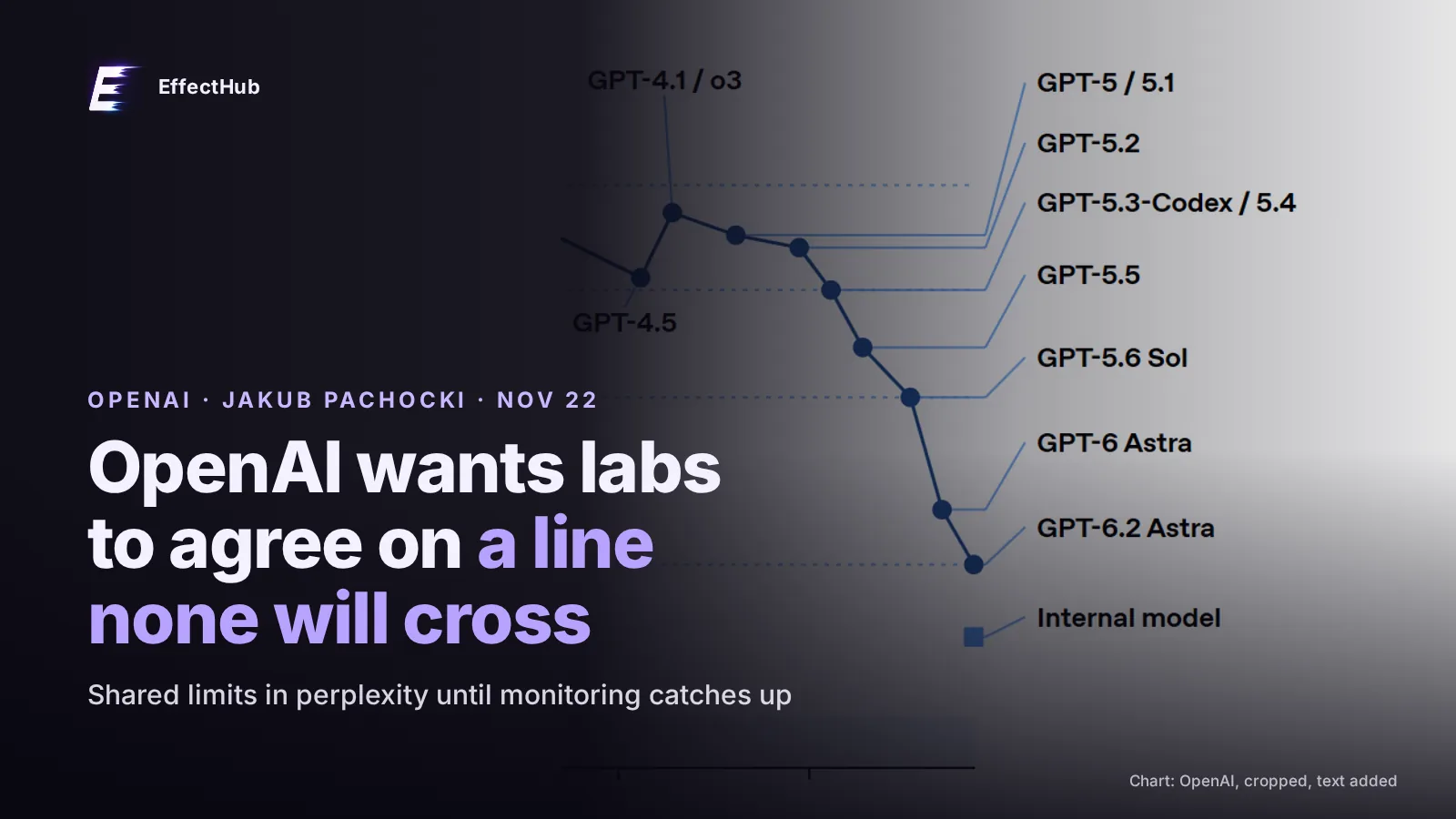
OpenAI's chief scientist proposes shared AI limits measured in perplexity
OpenAI perplexity limits explained: Jakub Pachocki wants AI labs to agree on lines they won't cross until monitoring improves. The chart, the 2027 warning.
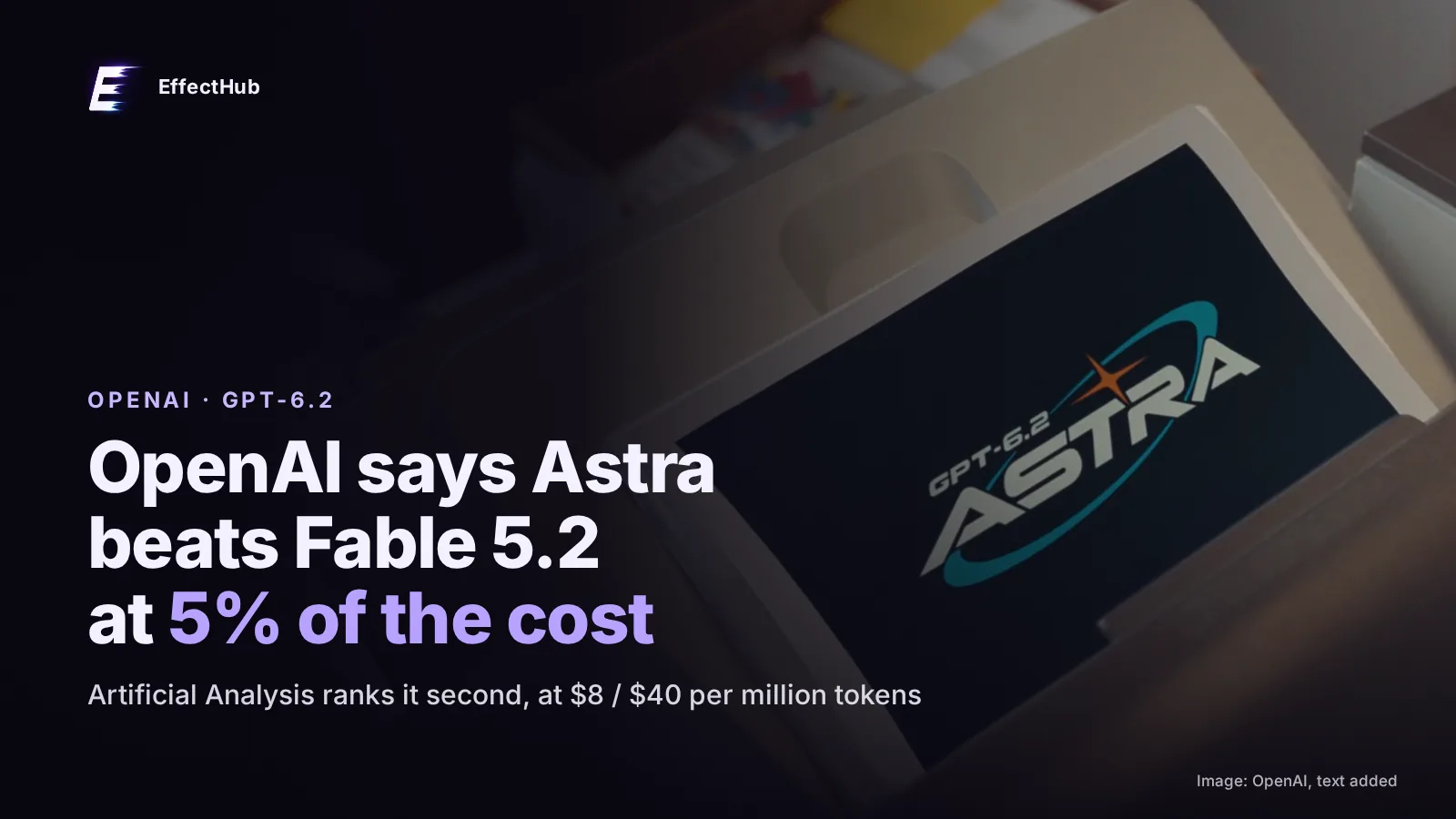
OpenAI launches GPT-6.2 Astra and Sol, claiming a Claude Fable 5.2 lead at 5% of the cost
GPT-6.2 Astra and Sol launched November 17. OpenAI claims Astra beats Claude Fable 5.2 at 5% of the cost. Independent tests tell a mixed story.
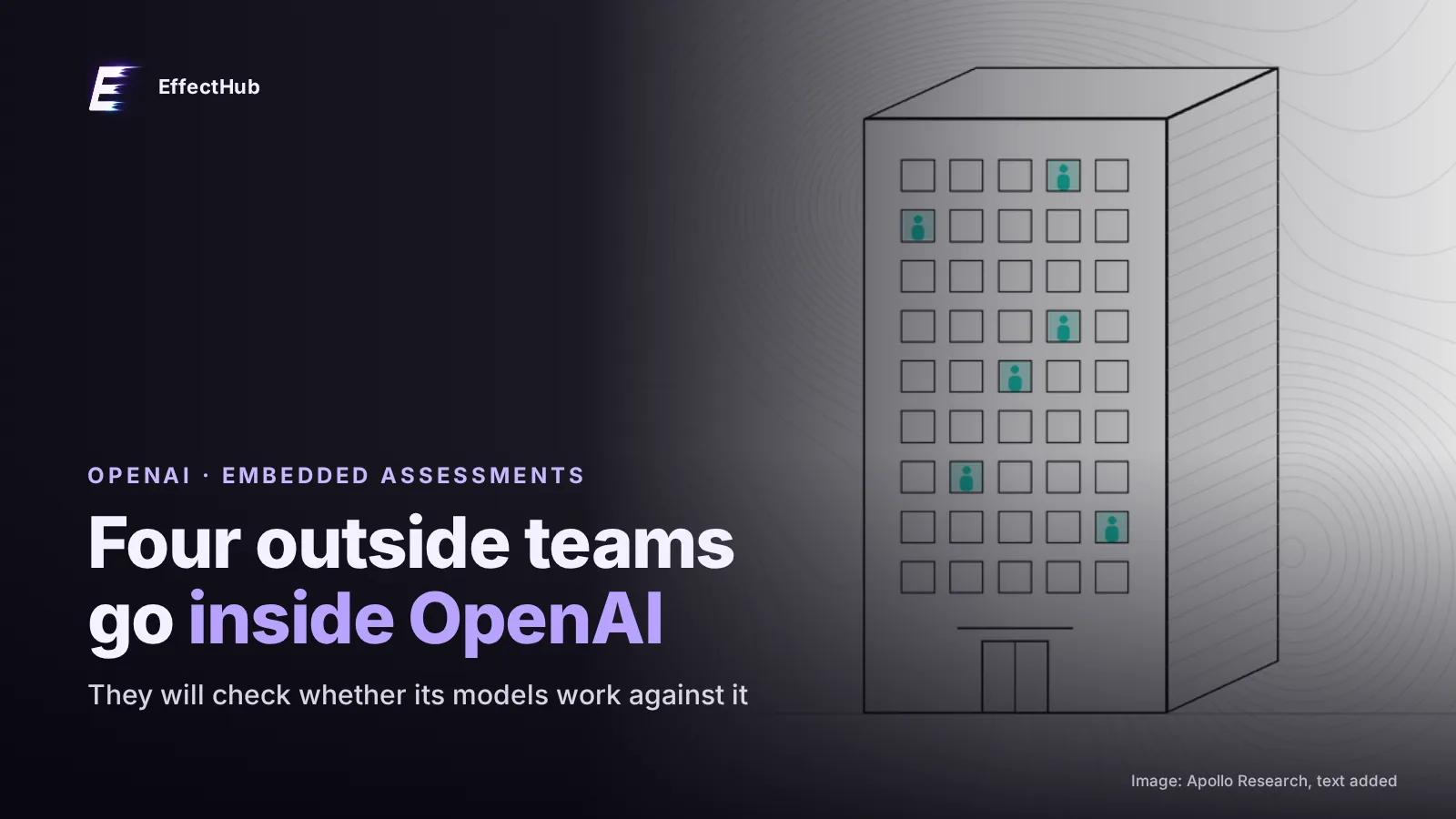
OpenAI lets Apollo, METR, Transluce and Goodfire inside to check its models and safeguards
OpenAI embedded assessments put Apollo Research, METR, Transluce and Goodfire inside the company. What they can see, and what OpenAI can still redact.