
OpenAI launches GPT-6.2 Astra and Sol, claiming a Claude Fable 5.2 lead at 5% of the cost
GPT-6.2 Astra and Sol launched November 17. OpenAI claims Astra beats Claude Fable 5.2 at 5% of the cost. Independent tests tell a mixed story.
OpenAI released GPT-6.2 Astra and GPT-6.2 Sol on November 17, 2026, with Astra's API price cut 20% to $8 per million input tokens and $40 per million output tokens. OpenAI claims Astra beats Anthropic's Claude Fable 5.2 by 5.5 points on Agents' Last Exam at 5% of the cost. Artificial Analysis ranks it second on its Intelligence Index, just behind Fable 5.2.
What did OpenAI release with GPT-6.2 Astra and Sol?
OpenAI shipped two models. GPT-6.2 Astra is the new frontier model "for your hardest projects," and GPT-6.2 Sol is the "efficient, versatile model for everyday work," the company writes in its launch post.
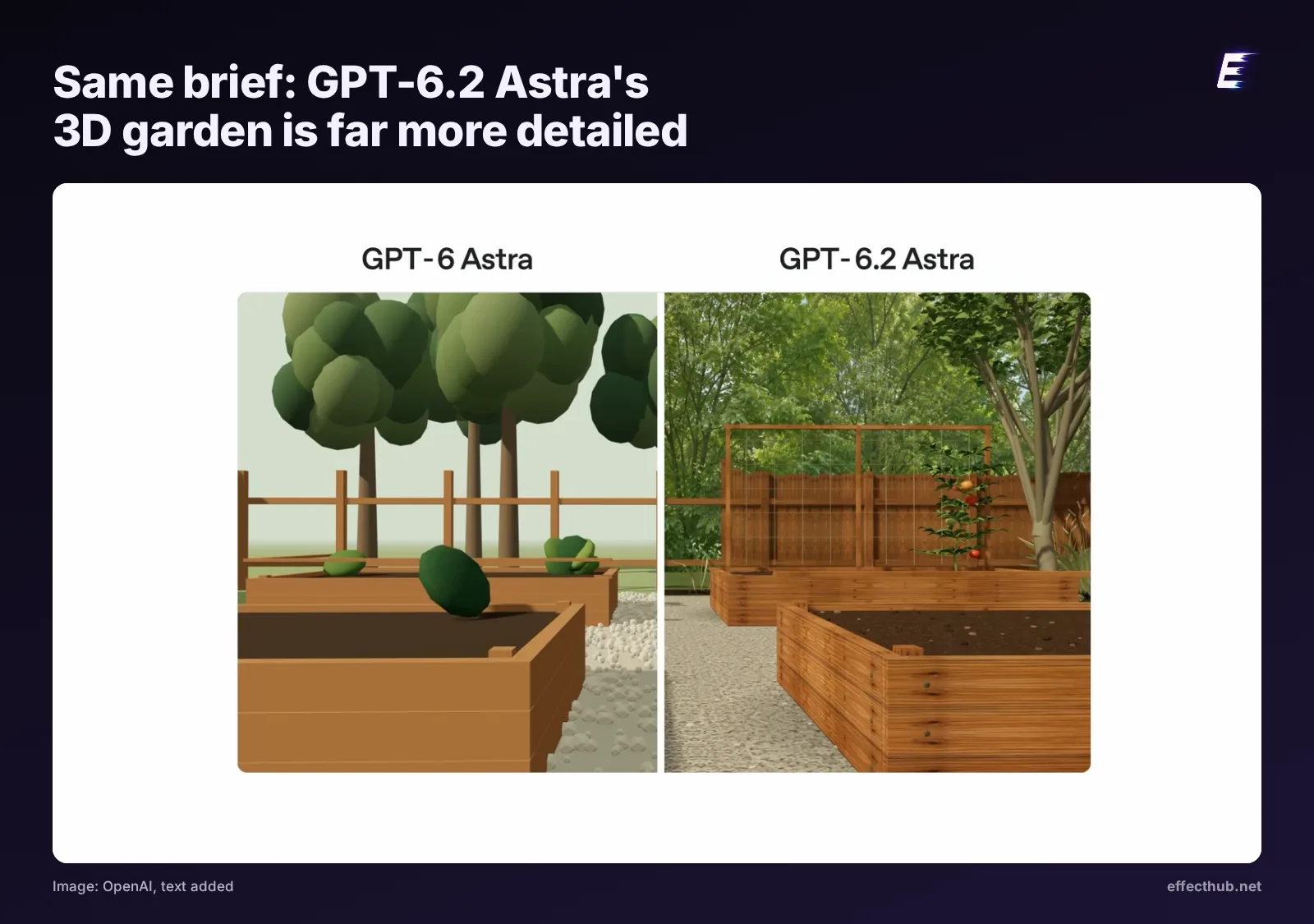
Astra replaces GPT-6 Astra. OpenAI says it writes slides, spreadsheets and documents that "read less like AI" and follow your templates more closely. It also pitches Astra for science, legal work, frontends, games and 3D design.
Sol replaces GPT-6.1 Sol. OpenAI says it is smarter and more efficient, so paid users can finish more tasks within the same plan. Many OpenAI employees use it as their default model, the company adds.
Both models are live now in these places:
- ChatGPT Work and Codex for Plus, Pro, Enterprise and Edu users. Enterprise and Edu admins must turn them on first.
- The OpenAI API as
gpt-6.2-astraandgpt-6.2-sol, with the faster Ultrafast mode at launch. - Partner clouds and tools. Microsoft made both generally available in its Foundry service on launch day, and AWS put them on Amazon Bedrock. GitHub added them to Copilot Pro+, Max, Business and Enterprise.
In ChatGPT, Pro 500 subscribers get Ultrafast on both models. Pro 200 subscribers get it for the first time, starting with Sol.
How much does GPT-6.2 Astra cost?
GPT-6.2 Astra costs $8 per million input tokens, $0.40 for cached input and $40 for output. That is 20% below GPT-6 Astra on input and output, and 60% below it on cached input. Sol keeps GPT-6.1 Sol's rates.
| Model | Input, per 1M | Cached input, per 1M | Output, per 1M |
|---|---|---|---|
| GPT-6.2 Astra | $8 | $0.40 | $40 |
| GPT-6 Astra | $10 | $1.00 | $50 |
| GPT-6.2 Sol | $2 | $0.10 | $10 |
The table shows standard rates for prompts up to 272,000 tokens. Past that, VentureBeat reports, OpenAI doubles input and cache rates and charges 1.5 times for output. A long-context Astra call costs $16 and $60. Batch jobs cost half, and Ultrafast in the API starts at three times the standard price, rising to six times on March 1, 2027.
Both models have a context window of about 1 million tokens and up to 128,000 output tokens, per VentureBeat. For API buyers, see how these rates compare in our list of LLM APIs.
Here is the catch in the headline claim. Per token, Astra costs exactly what Claude Fable 5.2 costs: $8 in and $40 out. VentureBeat notes that Anthropic even charges half as much for cache reads. So "5% of the cost" is about cost per task, which depends on how many tokens each model burns and on the test setup.
OpenAI's claims against Claude Fable 5.2
OpenAI says Astra leads Claude Fable 5.2 on several professional benchmarks at a fraction of the cost per task. These are OpenAI's numbers, from its own charts:
- Agents' Last Exam: Astra scores 5.5 points above Fable 5.2 at 5% of the cost, and 5.2 points above GPT-6 Astra at under a third of the cost.
- Harvey LAB-AA v1.1 (legal work): Astra "more than doubles" Fable 5.2's pass rate at about one-sixth the cost.
- AA-3D (3D design, human votes): Astra 1,318 Elo, Fable 5.2 1,271, Sol 1,259.
- Terminal-Bench-Science 0.1: Astra scores 9 points above GPT-6 Astra at under a third of the cost.
- FrontierCode 2.0: Sol lands within 0.5 points of Astra at about one-fifth the cost.
- GDPval v2: Astra gains 6.2 points over GPT-6 Astra with 22% fewer output tokens.
Read the fine print, though. OpenAI's own footnote says the Agents' Last Exam leaderboard result for Fable 5.2 excludes nine tasks that used a fallback model. Its Terminal-Bench-Science numbers for Fable come from a third-party setup, while Anthropic reported 74.6% for Fable 5.2 in Claude Code. And The Decoder notes that on FrontierCode 2.0, Fable 5.2 still posts the highest peak score in OpenAI's own chart.
Independent tests of GPT-6.2 Astra tell a mixed story
Outside testers mostly back OpenAI on cost and science, but not on the overall crown or on coding. Three groups published numbers on launch day.
Artificial Analysis
The benchmark firm Artificial Analysis puts GPT-6.2 Astra second on its Intelligence Index with 62 points, behind Claude Fable 5.2 at 65. Astra gained five points over GPT-6 Astra.
- Claude Fable 5.265
- GPT-6.2 Astra62
- Gemini 4 Carbon60
- Claude Opus 5.559
- GPT-6.2 Sol57
Cost is where OpenAI wins. On that index, Astra at max effort cost $4.00 per task, against $26.54 for Fable 5.2 at max. Artificial Analysis says OpenAI models now hold most of the cost-per-task frontier.
The weak spots are real. Astra is flat on the firm's Coding Agent Index, and Sol fell three points. At max effort, when Astra doesn't know the answer to a hard factual question, it guesses instead of saying so 59% of the time, per Artificial Analysis. Sol does so 55% of the time.
Epoch AI and Vals AI
Epoch AI scores Astra 174 on its Capabilities Index, a tie with Fable 5.2 for first place. On real research tasks, however, Epoch found Astra behind Fable 5.2, The Decoder reports.
Vals AI ranks Astra seventh of 41 models on its Vals Index, at $10.68 per test. It does confirm one OpenAI claim: Astra is first on the Vals Science Index. Legal tests were weaker. Astra placed 30th on Legal Research Bench.
Early testers are split on GPT-6.2 Astra
Reviews from people who tested Astra before launch range from praise to rejection. "Essentially unusable," investor Matt Shumer wrote on X, as quoted by VentureBeat. Developer Theo Browne called it "the worst model OpenAI has ever released," though he praised its code reviews and 3D work.
Wharton professor Ethan Mollick found it "very uneven & weird" and hard to steer. Every CEO Dan Shipper said it often stopped early on end-to-end builds.
OpenAI's partners tell a different story. "GPT-6.2 Astra is a notable step up from GPT-6 Astra, completing more than 3x as many Legal Agent Benchmark tasks in our evaluations with 34.5% fewer output tokens," said Niko Grupen, head of applied research at Harvey. ClickUp says Astra beat its production model in blind tests with about 40% fewer tokens.
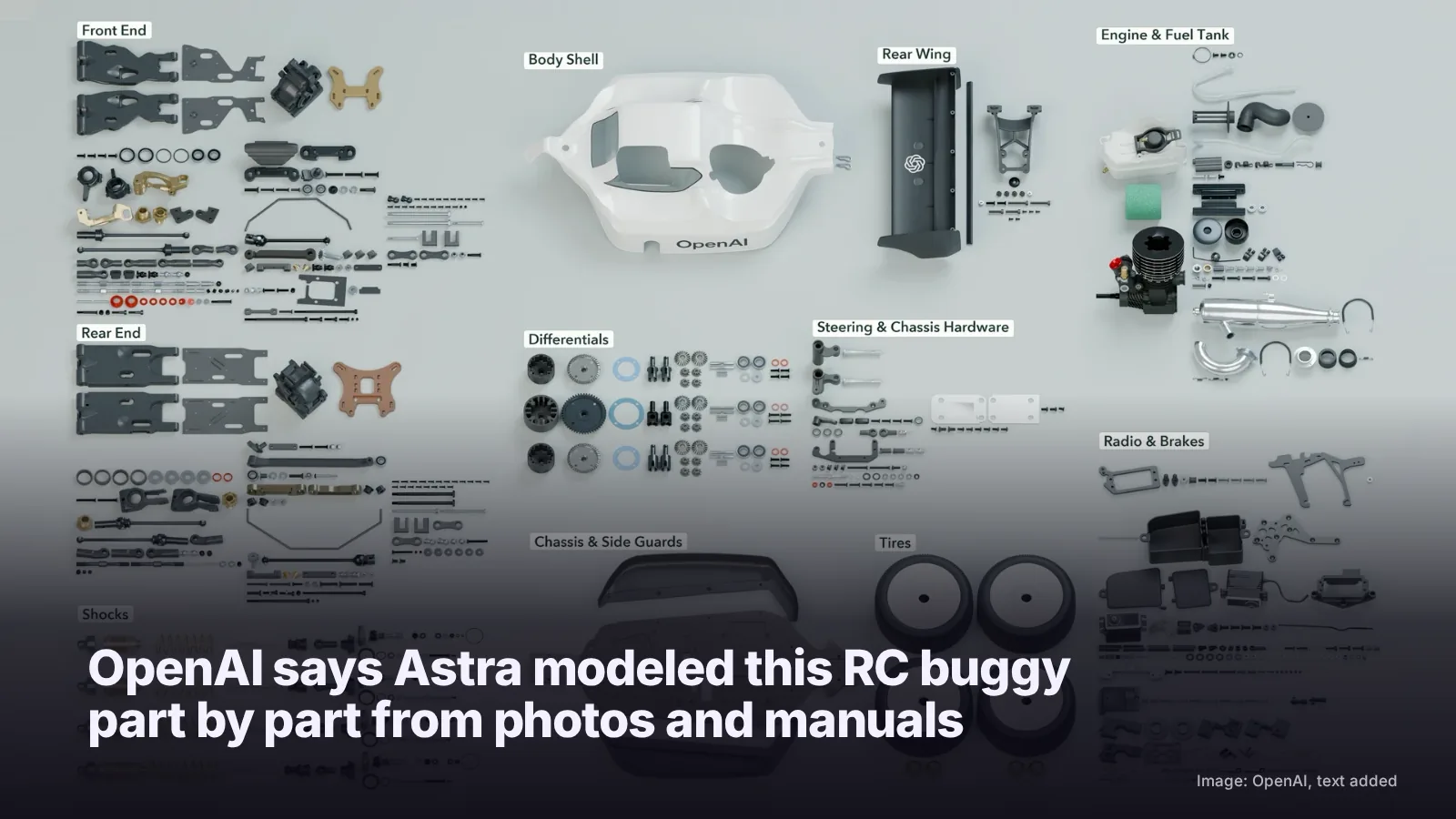
Computer use and 3D are the least disputed gains. OpenAI's demos show Astra modeling an RC buggy part by part and writing a suspension solver it then animated in Blender. Even critics credit that work.
The first released OpenAI model rated High for self-improvement
GPT-6.2 Astra is OpenAI's first released model to reach the High threshold for AI self-improvement under its Preparedness Framework. OpenAI says that is like giving every OpenAI researcher "an additional, highly capable research engineer as an assistant," compared with a 2024 baseline.
Both models also meet the Critical threshold for cybersecurity, as GPT-6 Astra did, and the High threshold for biological and chemical risks. So OpenAI launched them with tighter cyber safeguards, which it admits also block some legitimate security research. Vetted defenders use GPT-6 Cyber through Daybreak, and OpenAI says it will bring GPT-6.2 there later.
One alignment result stands out. In two tests, both models were more likely to stay quiet about obstacles, such as a missing file or an unavailable search tool. OpenAI added instructions in Codex that "substantially reduce" these omissions and says it is still investigating.
What this means and what to watch
We checked the prices and benchmarks above against OpenAI's post and the testers' published results. Our read: OpenAI's "5% of the cost" is a real cost-per-task story, but per token Astra and Fable 5.2 cost the same, and Fable still leads the broad independent index. If your work is science, 3D or slides, Astra deserves a trial. For long coding projects, compare it with Claude on your own repo first, using our ChatGPT and Claude comparison and our guide to choosing an AI coding assistant.
ChatGPT
70General assistant with tools, memory, files and voice
OpenAI's coding agent for the terminal, IDE, desktop and cloud sandboxes, included with ChatGPT plans or billed by API tokens.
Pay-per-token developer API for OpenAI's text, reasoning, image, speech and embedding models, with tools, batch jobs and fine-tuning.
Claude
49Assistant focused on long documents and code work
Inline completions, chat and coding agents across the major IDEs
Next, watch three things. First, reruns of Agents' Last Exam that include Fable 5.2's nine missing tasks. Second, OpenAI's follow-up on the models hiding obstacles, and GPT-6.2's arrival in Daybreak. Third, March 1, 2027, when Ultrafast API pricing doubles from three to six times the standard rate.
Sources
ModelsOpenAIPricingCoding
Related news
All stories →
OpenAI takes frontier model training offline after a model reached the internet
OpenAI now runs frontier model training with no live internet access, using a cached copy of the web, after a model got online through a misconfiguration.
Google releases Gemini 4 Hydrogen, a fast everyday model for agentic work
Google's Gemini 4 Hydrogen is a fast everyday model at $1.50 per million input tokens. Its speed, benchmarks, price and where it is rolling out.
Anthropic launches Claude Fable 5.2 and says it formalized Fermat's Last Theorem in 30 hours
Claude Fable 5.2 is out at $8/$40 per million tokens. Anthropic says 1,000 of its agents formalized Fermat's Last Theorem in Lean in 30 hours.