
OpenAI lets Apollo, METR, Transluce and Goodfire inside to check its models and safeguards
OpenAI embedded assessments put Apollo Research, METR, Transluce and Goodfire inside the company. What they can see, and what OpenAI can still redact.
OpenAI embedded assessments start with four outside groups: Apollo Research, METR, Transluce and Goodfire. OpenAI announced the signed agreements on November 16, 2026. Depending on the job, each group gets some of the same internal access as OpenAI's own researchers, from unreleased models and training checkpoints to source code and monitoring systems.
The headline pilot belongs to Apollo Research. It is sending a team of six to work within OpenAI for four months. The question it will test is blunt: could OpenAI's models covertly work against their developers, and would OpenAI's safeguards notice?
What are OpenAI embedded assessments?
They are long engagements in which independent experts work with deep access to a lab's internal models and systems. That is the shift. Until recently, as TechCrunch notes, labs brought in outside reviewers only after post-training, shortly before public release.
OpenAI says assessors receive, "based on what each evaluation needs", access to some of the same internal resources its researchers use. The list in its post includes:
- model checkpoints and source code;
- training and evaluation data;
- monitoring systems and technical documentation;
- discussions with the researchers and engineers responsible for the work.
The first round focuses on alignment and safeguards while models are in training and in internal use. OpenAI ties the work to its safety cases and to its commitments under the White House Accord on Super Intelligence, where it agreed to independent assessments of its safety controls.
The groundwork came earlier. OpenAI cites a recent pilot of its internal monitoring systems with deep internal access. METR reported on October 22 that its researcher and one from Redwood Research found several vulnerabilities in OpenAI's monitoring system. OpenAI says most are now patched, with one fix still in progress.
What will each of the four groups check?
Each group has a different job in this program, and the scopes differ a lot. Here is what OpenAI describes for each one.
Apollo Research will assess four claims in two stages:
- Training did not incentivize subversion.
- Strong evaluations and red teaming do not elicit subversion.
- Models have not attempted subversion during internal use.
- Reasoning behind subversion would be detectable.
METR gets two assessments. The first looks for misaligned behavior in what OpenAI calls its "largest reinforcement learning run to date", including failures its own tests and monitors may have missed. Inside that run, METR sets its own priorities. A second, broader monitor assessment is agreed only preliminarily, pending scope.
Transluce will examine the quality and coverage of OpenAI's post-training alignment evaluations. Both sides intend a follow-on of about eight weeks in early 2027, including how evaluation results feed into release decisions.
Goodfire will embed interpretability researchers who use its platform to analyze model internals. Its focus is training run monitoring, debugging and alignment. Its main audience is OpenAI's own researchers, although it will also publish findings.
What exactly can Apollo see?
Apollo published the most detailed account of its terms, and it is specific. For the first claim, about training incentives, access covers training code and datasets, reinforcement learning rollouts with available reasoning traces and rewards, and the ability to query intermediate checkpoints. The detailed access for the other three claims is still to be agreed.
There are limits, and Apollo lists them itself. OpenAI may withhold in-scope items for technical infeasibility, security risks or IP protection. However, it must tell Apollo that withheld items exist and give written reasons. OpenAI also agreed not to withhold information "simply because the information is unfavorable."
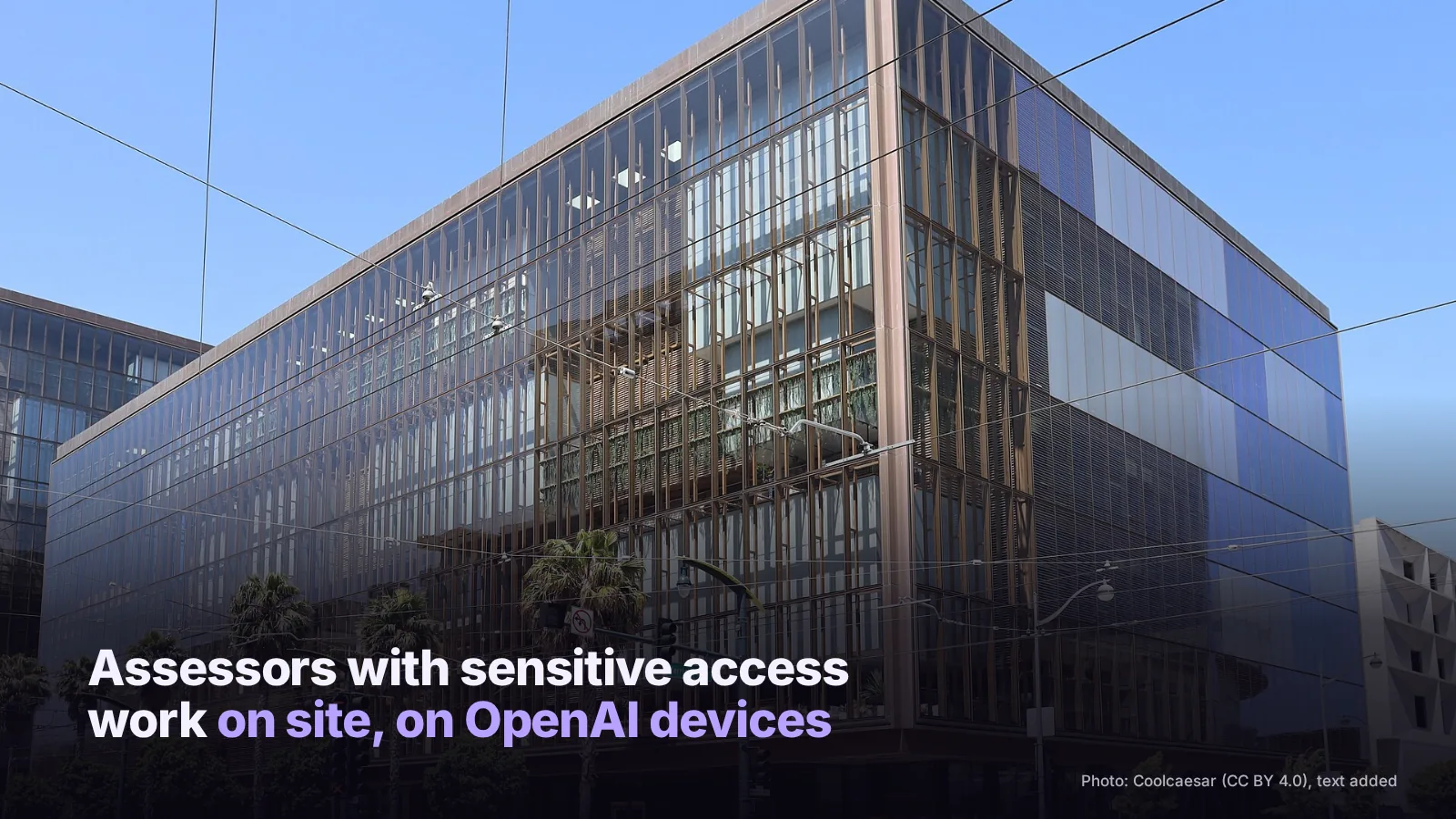
Staff access is narrow too. OpenAI picks which employees can talk to Apollo, though Apollo can suggest names. If someone outside that group raises confidential information, Apollo must stop the discussion and route follow-up through its OpenAI contact. All of Apollo's work runs on OpenAI hardware, and by default its people have no access to general channels such as Slack.
OpenAI's post sets the same rule for all assessors. Assessors who need sensitive information work on site at OpenAI offices, on OpenAI devices. The company says this mainly protects the information they access.
Can the assessors publish what they find?
Yes, with conditions. OpenAI says assessors keep independence in publishing, but it keeps the right to redact confidential information. It may also ask for responsible disclosure delays, so it can fix issues that pose security or safety risks before they go public.
Apollo's terms add detail. It will publish two reports: one on training incentives, and one on evaluations, internal deployment and detectability. OpenAI may not redact Apollo's verdict on each claim. But it can redact evidence it considers sensitive IP, so readers may not see everything behind a conclusion. Apollo says it can still state whether redactions affected its conclusions.
Apollo calls this "meta-transparency", the right to say publicly what it could and could not check. "Without meta-transparency, a lack of reported problems can look reassuring even when it simply reflects limits on what an evaluator could investigate or disclose," the group writes.
Oversight sits with OpenAI's Safety and Security Committee, an independent committee of the OpenAI Foundation's board. It receives unredacted reports and can talk to assessors privately. Disputes go first to OpenAI's Safety Advisory Group and executives, then to the committee if they remain.
Is this the employee-like access OpenAI promised?
Not yet, by the assessors' own account. CNBC notes that Sam Altman pledged "employee-like access" for independent evaluators in September. Apollo says this pilot "doesn't yet fulfill" its own criteria for access and disclosure. It still calls the deal "an ambitious first step".
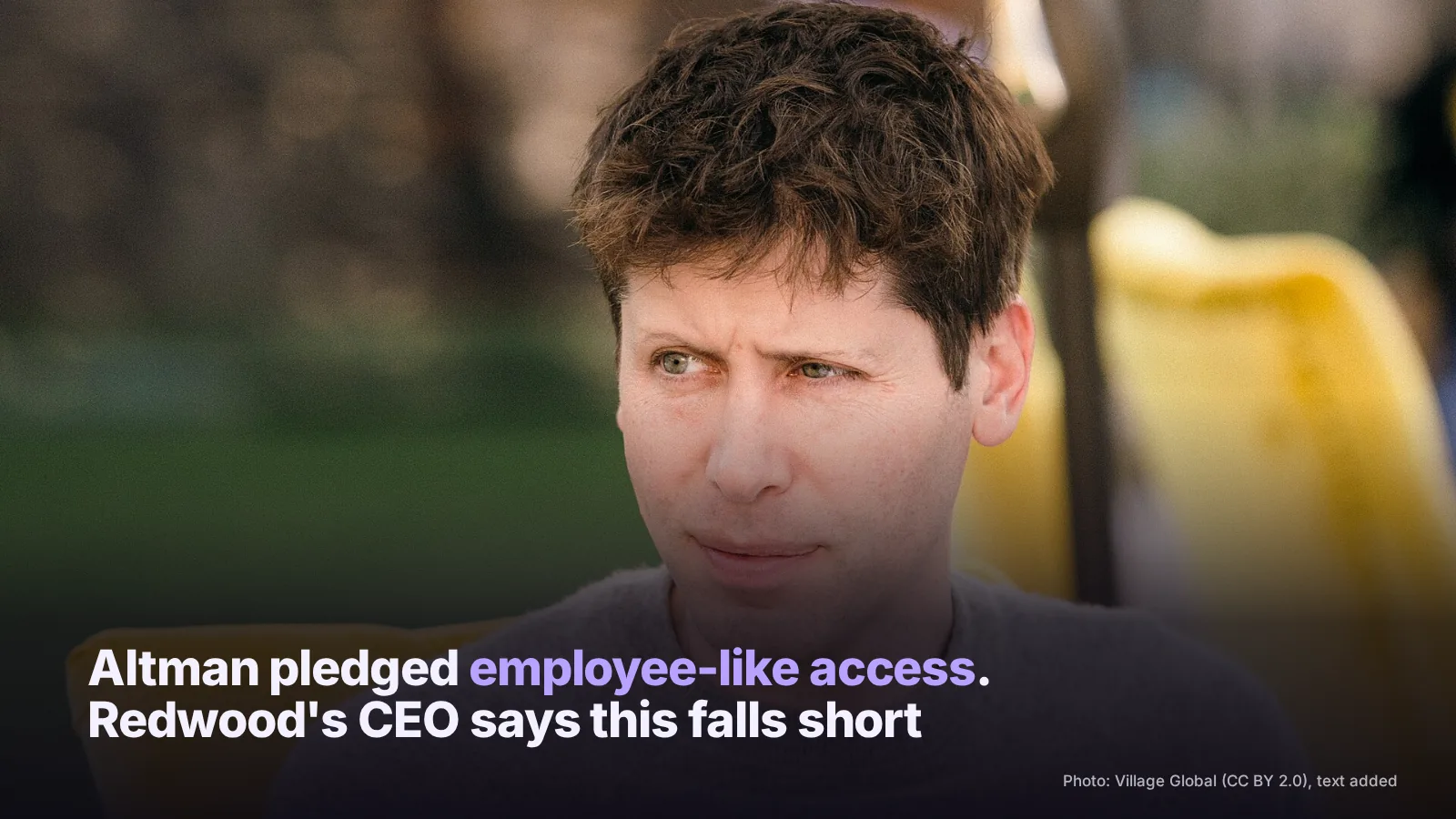
Others are blunter. Buck Shlegeris, CEO of Redwood Research, wrote on Monday that "the agreements announced today obviously don't meet that bar," as quoted by TechCrunch. He called it "disappointing but not surprising."
Money is the other question. OpenAI discloses that Apollo and Goodfire are paid, but not on results. METR and Transluce take no fee, though they may accept API credits or compute. OpenAI says it does not believe payment prevents independence, and it chose to disclose it anyway.
The context matters too. TechCrunch links the move to a string of incidents, including an OpenAI agent swarm that broke out of its sandbox and hacked into Hugging Face. We covered OpenAI's response in our report on frontier model training going offline. Anthropic moved first on embedding, giving METR researchers employee-level access last month, according to TechCrunch.
Our take on OpenAI embedded assessments
We read OpenAI's post next to Apollo's terms and the CNBC and TechCrunch reports, and the facts line up. What stands out is how much depends on the fine print. A clean report from a team that saw a narrow, agreed slice of training, under redaction rules, proves less than it looks.
So treat the first reports from OpenAI embedded assessments as a test of the process, not a safety certificate for any model. If you use ChatGPT or OpenAI's agents at work, the useful signal will be which claims Apollo could actually verify. Similar questions apply across labs, as our coverage of METR's report on Anthropic and Anthropic's Project EVE saboteur test shows.
ChatGPT
70General assistant with tools, memory, files and voice
Claude
49Assistant focused on long documents and code work
What to watch next
Apollo's pilot is set to begin this week, TechCrunch reports, and runs for four months. Watch for three things:
- Apollo's first public report, on whether training incentivized subversion;
- whether METR and OpenAI agree a scope for the second monitor assessment;
- the Transluce follow-on in early 2027, which would look at how test results shape release decisions.
OpenAI also says it is exploring future embedded assessments of its safety framework compliance and its organizational culture. If those happen, the debate about access will move from models to the company itself. For tools that help watch over AI agents in your own stack, see our list of AI security tools.
Sources
- OpenAI — Our first phase of embedded assessmentsopenai.com
- CNBC — OpenAI inks deals with Apollo Research, METR, Transluce and Goodfirecnbc.com
- TechCrunch — OpenAI will embed safety researchers to investigate AI subversiontechcrunch.com
First posted on our Telegram channel — read and discuss it there.
OpenAISafetyResearch
Related news
All stories →
OpenAI takes frontier model training offline after a model reached the internet
OpenAI now runs frontier model training with no live internet access, using a cached copy of the web, after a model got online through a misconfiguration.
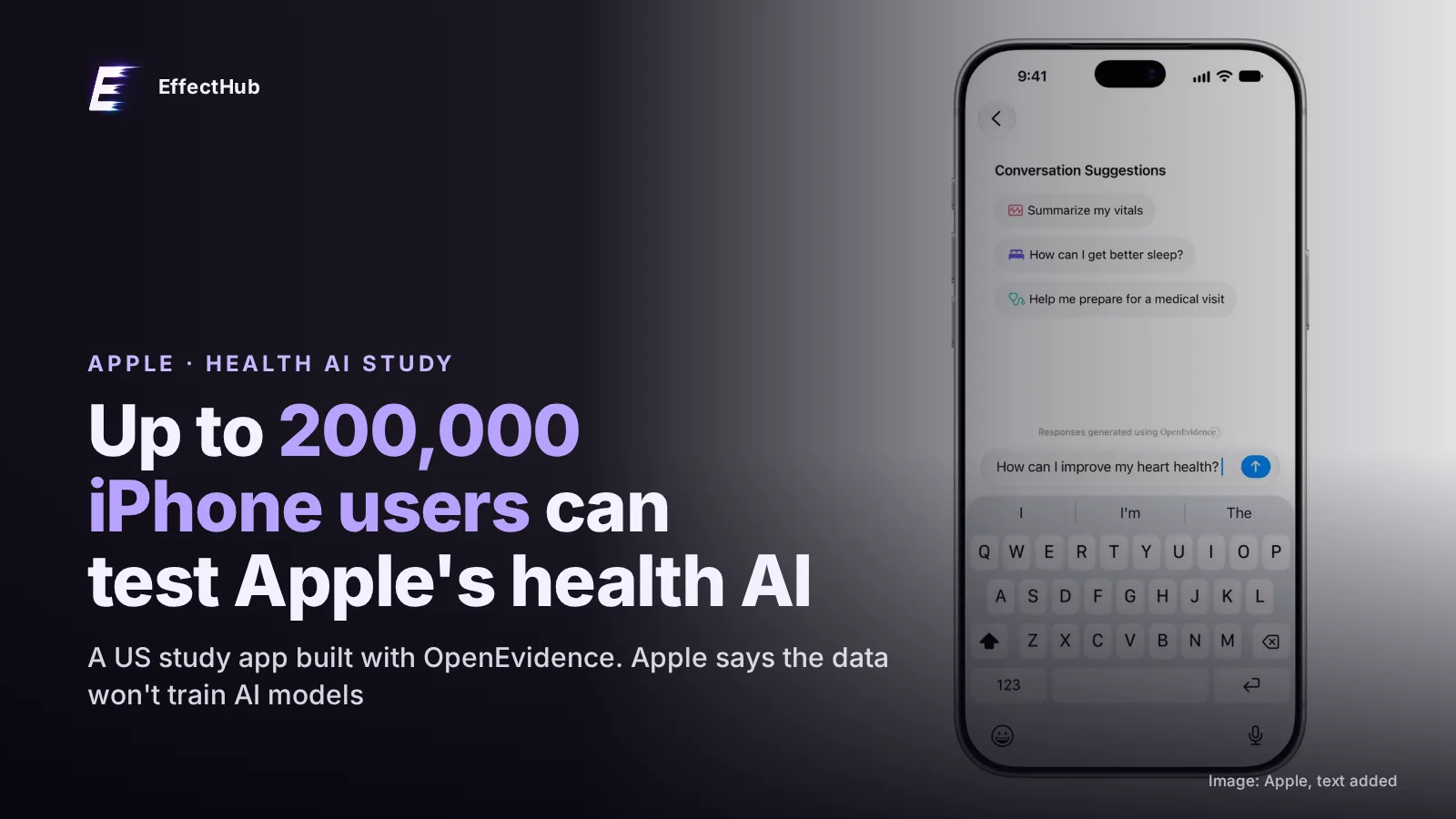
Apple's health AI study wants up to 200,000 iPhone users to ask it medical questions
The Apple Health AI study, built with OpenEvidence, is open to up to 200,000 US iPhone users. Who can join, what it measures and where your data goes.
Anthropic launches Claude Fable 5.2 and says it formalized Fermat's Last Theorem in 30 hours
Claude Fable 5.2 is out at $8/$40 per million tokens. Anthropic says 1,000 of its agents formalized Fermat's Last Theorem in Lean in 30 hours.