
Google flags a Nov 9–11 gap in its Search Console Generative AI performance report
Google's Search Console Generative AI performance report undercounted impressions on Nov 9–11. What the report tracks and which data gaps to watch.
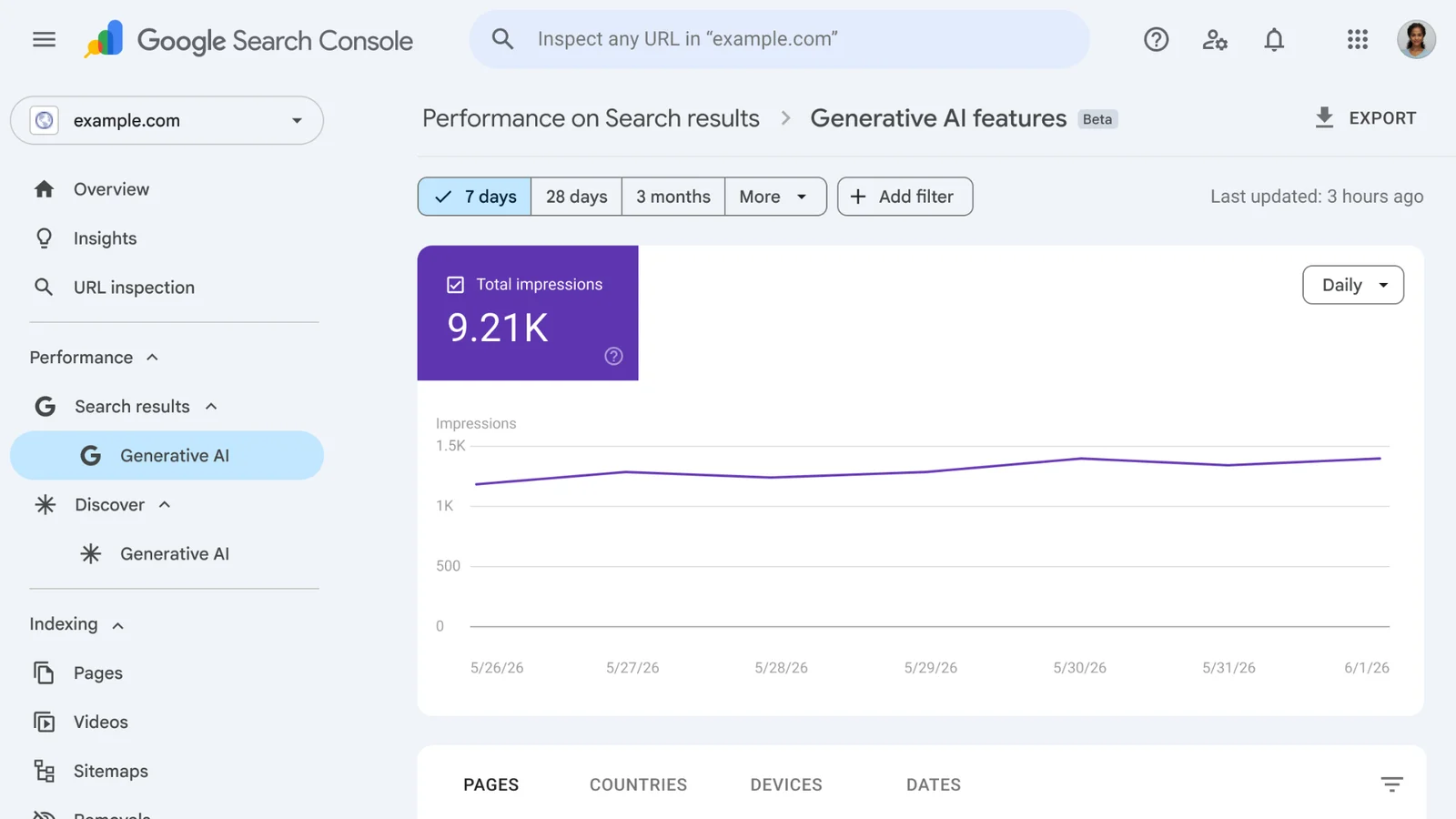
Google's Generative AI performance report in Search Console undercounted impressions for November 9 to 11, 2026, according to Google's own data-anomaly log. It is the second logged gap in the Search version of the report since Google launched it on June 3. If your AI Overviews and AI Mode numbers dipped earlier this week, check that log before you change anything on your site.
What is the Generative AI performance report?
It is a Search Console view of how often your pages appear inside Google's AI answers. Google announced "Search Generative AI performance reports" on June 3, 2026, with separate reports for Search and Discover, in a Search Central post.
The reports give "dedicated views of your impressions within generative AI features on Search, such as AI Overviews and AI Mode, as well as generative AI features in Discover," Google wrote. The same data still sits inside the overall performance report. A separate view simply pulls it out.
Access came in stages. Google first rolled the reports out to "a subset of websites." Its companion post on the Google blog said the first group was website owners in the UK. A note now at the top of the Search Central post says that as of August 31, 2026, Google has "rolled out these insights to all websites worldwide."
Google's launch screenshot, our cover image, shows where it lives. Under Performance, both Search results and Discover get a child item called "Generative AI." The page header reads "Generative AI features" with a Beta badge.
What does the report count?
It counts impressions, and that is all. Google's help page for the Search report lists two features: AI Overviews and AI Mode. Data from Search Labs experiments is left out.
You can slice those impressions four ways, per Google's launch post and help page:
- Pages: which URLs appeared in AI features, mostly credited to the canonical URL.
- Countries: where the search came from.
- Devices: desktop, tablet or mobile (Search only).
- Dates: hourly, daily, weekly or monthly.
A search type filter splits "Web: text-based" from "Web: multimodal," which covers Google Lens, Circle to Search and other image searches.
Two counting rules matter. In the Search report, the chart is aggregated by property. So if two of your links show up in one AI answer, Google counts a single impression. The Discover version, by contrast, aggregates by page and counts each impression separately.
The docs list no click metric. So the report alone cannot give you a click-through rate for AI answers. Google says it will add "additional metrics over time."
What does Google's data-anomaly log say?
Google keeps a public Data anomalies in Search Console page. Its 2026 entries for the Performance reports describe several gaps that hit AI data directly.
- November 9 to 11: a logging error "caused a decrease in impressions on the Generative AI performance report in Search." Google says it "affects data logging only." As of November 14, the entry has no note about restoring the data.
- August 13 to 17: the same kind of error hit the same report. In an update dated August 21, Google said the missing data was restored and "The Performance report now shows complete metrics."
- August 13 and June 24: logging errors cut clicks and impressions in the Discover report. Properties with access to Generative AI features in Discover also saw lower reported impressions there.
- Aug 13–175
- Nov 9–113
The same page lists more Discover gaps on May 7 to 8 and May 21. All of these errors affect logging only, per Google, which means your real visibility did not change. The chart just shows fewer impressions than happened.
Which other Search Console changes affect your baseline?
Three other entries affect the main Performance report that you compare the AI numbers against.
First, a logging error kept Search Console from accurately reporting impressions from May 13, 2025 until April 27, 2026. Google says you may see lower impressions now that it is fixed. CTR and average position, which depend on impressions, were affected too, but clicks were not. So treat impression baselines from that period with care.
Second, FAQ rich results stopped appearing in Google Search on May 7, 2026. FAQ impressions in the performance report dropped as a result. If you lose impressions around that date, a missing FAQ result may explain it.
Third, bulk data exports are missing February 28 and March 1, 2026 for some properties. Google says "This data won't be recovered." If you pipe exports into a warehouse, mark those two days.
How does the report relate to the AI opt-out control?
It is the measuring tool for a decision Google now lets you make. Alongside the reports, Google added a Search generative AI control under Settings in Search Console. It lets a site include or exclude its links and content from AI Overviews, AI Mode and generative AI features in Google Discover.
TechCrunch reported that the toggle follows requirements from the UK's Competition and Markets Authority. In its coverage, it also noted the new impression data could sway publishers weighing an opt-out.
Google's control documentation ties the two together. The report "can help you get an idea of how changing your control may impact traffic to your site," it says. Excluded sites get no traffic or impressions from these features. Google says the choice is not a ranking signal for the rest of Search. It also does not cover AI training, which Google handles with Google-Extended.
Scale explains why people care. Google says AI Overviews has over 2.5 billion monthly active users and AI Mode has surpassed one billion monthly users.
- AI Overviews2.5
- AI Mode1
Our earlier story on Alphabet's record drop over AI search covers the business side of that shift.
How should you read the Generative AI performance report now?
Treat it as a trend line with known holes, not an exact count. Here is a short routine:
- Annotate the gaps. Mark August 13 to 17 and November 9 to 11 on any AI impressions chart, plus the Discover dates.
- Compare like with like. Use weeks after August 31 as your baseline, since that is when Google finished the rollout.
- Pair it with clicks. The AI report has no clicks, so read it next to the Web search type in the main Performance report.
- Check the page level. Use the Pages tab to see which URLs earn AI impressions, then compare them with your top organic pages.
Third-party SEO suites can add their own tracking on top. Our list of AI SEO tools covers the main options, and our page on SEO automation lists tools that schedule these checks.
Semrush
71Search and AI-visibility suite for keywords, backlinks, audits and competitor traffic, owned by Adobe since April 2026
Ahrefs
70Backlink index, keyword research, rank tracking and site audits from one crawler, now with AI-answer visibility tracking
Our take
We read every entry on Google's anomaly page and the three help documents behind this story, and the labels above match Google's wording. Our view: the Generative AI performance report is Google's own AI visibility number, so it beats guessing. But two gaps in five months mean you should check the anomaly log before blaming content or a core update. For broader AI search tracking, use it as one input, not the only one.
What to watch next
Watch the November 9 to 11 entry for a restore note like the one Google added on August 21. Also watch for the extra metrics Google says it will add over time. Google has not named them, but a click metric would let site owners measure AI traffic, not just AI visibility.
Sources
- Google Search Central — Introducing Search Generative AI performance reports in Search Consoledevelopers.google.com
- Search Console Help — Data anomalies in Search Consolesupport.google.com
- Search Console Help — Generative AI performance report (Search)support.google.com
- Google — New opportunities, control and insights for website ownersblog.google
- TechCrunch — Publishers will be able to opt out of AI Search, thanks to new regulationtechcrunch.com
GoogleSearchSeo
Related news
All stories →
Google AI for students goes off by default on K-12 accounts, and Google Search goes with it
Google AI for students will be off by default on K-12 accounts until a school admin turns it on, and Google Search is on the list. What changes and when.
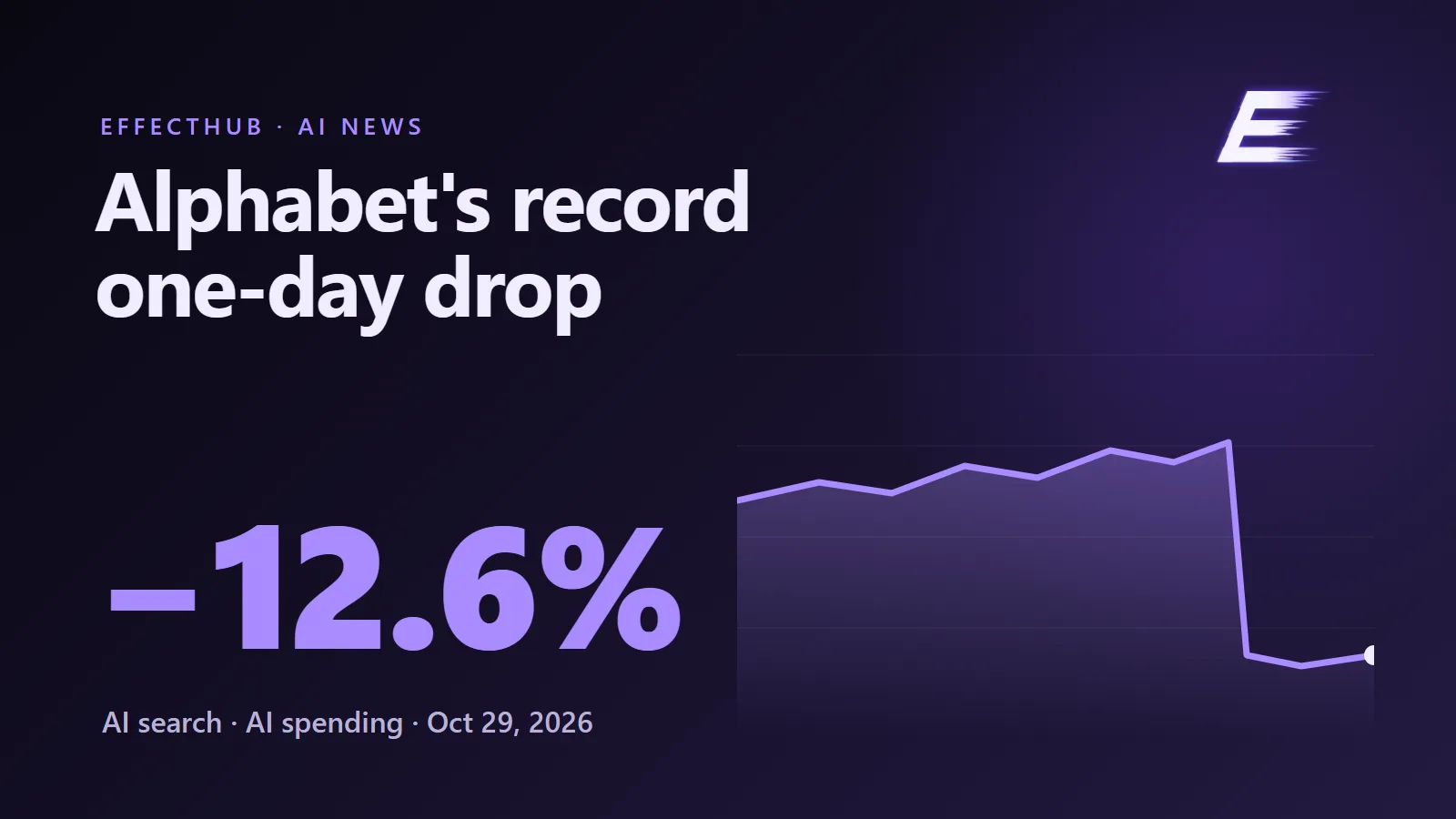
Alphabet stock suffers record one-day drop as AI search and AI spending weigh on Google
Alphabet stock fell 12.6% on October 29, its worst day since 2004. How AI search, record AI spending and negative cash flow drove the sell-off.
Google releases Gemini 4 Hydrogen, a fast everyday model for agentic work
Google's Gemini 4 Hydrogen is a fast everyday model at $1.50 per million input tokens. Its speed, benchmarks, price and where it is rolling out.