
Prompt management tools: when a shared prompt library beats a doc, and what the platforms add
Prompt libraries for ChatGPT and Claude versus developer platforms with versioning, evals and tracing: a checklist, verified prices and how to choose.
On this page12 sections
- Two audiences, two products
- When a shared library beats a doc
- What the platforms add
- Developer platforms compared
- What the open-source options give you
- Team libraries compared
- How to choose
- Questions people ask
- What is a prompt management tool?
- Is there a free prompt management tool?
- Do I need prompt versioning?
- Sources
Most teams find out they need prompt management the same way: the prompt that works lives in one person's notes, a copy with a small fix lives in Slack, and the production version is a third thing nobody can find. The question is not whether to organize prompts but in which kind of product, and the catalog's prompt management shortlist mixes two kinds that barely overlap.
What changes the choice most is who runs the prompt. If a person pastes it into ChatGPT or Claude, you need a shared library that lives where they type. If your software sends it to a model API, you need a platform that treats the prompt like code: versioned, tested, traced and priced. Prices are from each vendor's own pricing page, October 2026.
Two audiences, two products
For non-technical teams, the product is a library inside the chat window. AIPRM is a browser extension for ChatGPT and Claude; its free plan holds two private prompts and a single favorite, with custom lists and team admin on paid plans. Prompt Blaze is an extension for Chrome, Firefox, Brave and Edge that runs saved prompts in ChatGPT, Claude, Perplexity, Gemini, Poe and Grok, fills placeholders such as {{text}} from the page, and chains prompts. PromNest is a web app with a shared team library and version history. StickyPrompts and TypingMind replace the chat window with a workspace that has a built-in prompt library.
For engineering teams, the product is a prompt registry wired into the application. Langfuse's documentation states the goal plainly: decouple prompt updates from code deployment. The prompt lives in the platform, the app fetches it by name, and a product manager can change the wording without a release. PromptLayer, Langtail, LangWatch, Lunary, LangSmith, Agenta and Portkey all work this way.
When a shared library beats a doc
A document is the right tool until three things happen. Reuse: more than two people run the same prompt, and the doc drifts from their clipboard copies. Placeholders: the prompt has slots for a product name or pasted text, and filling them by hand breeds errors. Change: someone improves the prompt, and you need to know what changed and be able to go back.
Placeholders need variables, which Prompt Blaze, PromNest, StickyPrompts and Quartzite all list. Change needs versioning, and here the two audiences split: PromNest records every edit as a version with diffs and rollback, Quartzite keeps a history of prompt iterations and model settings, and most browser extensions do not version.
What the platforms add
The developer platforms share a feature set; here it is, with one vendor example each.
- Versioning with history. LangSmith saves each change as a commit with a hash, diffs it against the previous one, and lets code pin a commit. PromptLayer lists diffs, comments and rollback.
- Labels or environments. A label such as
productionpoints at one version and moves without a code change. LangSmith reservesstagingandproductiontags for this; Langfuse has deployment labels; PromptLayer has release labels. - Variables and templates. LangSmith templates take
f-stringormustacheplaceholders; mustache adds conditionals and loops. Portkey's free tier has versioning and variables on three templates. - Evaluations. PromptLayer runs human and AI graders, backtests and regression tests before deployment; Langtail validates with natural-language evaluation, pattern matching or custom code; Agenta checks a change against a test set before it ships.
- A/B tests. PromptLayer releases a new version gradually and compares metrics; LangWatch and Lunary both list A/B testing.
- Tracing and cost. Langfuse links prompts to traces to compare performance by version; LangWatch traces each agent step with cost and latency over OpenTelemetry; Agenta traces every run with its cost.
If you need only the first three, a gateway's registry such as Portkey's or Helicone's is enough. Evaluations and tracing make it an observability platform; those live in the catalog's LLM observability category.
Developer platforms compared
Prices are in the vendor's currency and exclude model API costs; "not stated" means the vendor's own pages do not call the product open source.
- Langtail, Pro$99/mo
- PromptLayer, Pro$49/mo
- Portkey, Production$49/mo
- Langfuse, Core$29/mo
- Agenta, Pro$29/mo
| Tool | Pricing model | Entry paid plan | Free tier | Open source | Self-hosting |
|---|---|---|---|---|---|
| Langfuse | Flat plus usage | Core, $29/mo | 50k units/mo, 2 users, 30 days | MIT, except ee folders | Free; Enterprise custom |
| LangSmith | Per seat plus traces | Plus, $39/seat/mo | 1 seat, 5k base traces/mo | Not stated | Enterprise only |
| PromptLayer | Flat plus overage | Pro, $49/mo | 5 users, 2.5k requests/mo, 10 prompts | Not stated | Enterprise, single-tenant |
| Langtail | Flat | Pro, $99/mo | 2 prompts, 1,000 logs/mo, 30 days | Not stated | Enterprise |
| LangWatch | Per core seat | Growth, €29/seat/mo | 50k events/mo, 2 users, 14 days | Apache 2.0 | Yes; Enterprise adds SSO |
| Lunary | Per user | Team, $20/user/mo | Not listed | Not stated | Enterprise |
| Agenta | Flat plus runs | Pro, $29/mo | 2 members, 5,000 runs/mo, 1 week | MIT | Free; Enterprise custom |
| Portkey | Flat plus overage | Production, $49/mo | 10k logs/mo, 3 templates, 3 days | Gateway MIT | Yes; Enterprise private cloud |
| Promptfoo | Open source; custom above | Enterprise, custom | Community, free forever | MIT | Yes; On-Premise custom |
Langtail
85Spreadsheet-style workbench for writing, testing and shipping prompts, with a firewall on the outputs
Simulates user scenarios against LLM agents, scores the answers and traces every step in production
Lunary
71Tracing, analytics and prompt versioning for LLM apps, with a self-hostable community edition.
Prompt versioning, evals and tracing for LLM engineering teams
What the open-source options give you
Three platforms above are MIT-licensed and divide the job differently. Langfuse is the full platform, observability, evaluation, prompt management and datasets, free to self-host without limits on projects, users or usage; the paid tier adds audit logs, project-level access control and SOC 2 reports. Agenta is the same shape at a smaller scale, with prompts, tools and skills versioned like code and rollback to any revision. Promptfoo is not a registry but a command-line tool that runs evaluations and red-team scans from a config file, for teams that keep prompts in git and want tests in CI.
Self-hosting's honest cost is the database: LangWatch runs on your own ClickHouse, and Langfuse's enterprise self-hosted pricing is additive to a ClickHouse commercial plan.
A last reason to prefer one you can run yourself: vendors disappear. Humanloop, which sold prompt management and evaluation, was sunset on September 8, 2025 after its team joined Anthropic, with customer data deleted the same day. Check the export path before leaving gets expensive.
Team libraries compared
| Tool | Pricing model | Entry price | Free tier | Team sharing |
|---|---|---|---|---|
| AIPRM | Subscription | Plus; price shown only in-app | 2 private prompts, 1 favorite | Team admin from Elite; business plans by seat |
| Prompt Blaze | One-time | $49 | None; 60-day refund | Not listed; prompts live in the browser |
| PromNest | Monthly | Pro, $5/mo | 100 prompts | Team, $15/mo, 5 seats, 1,500 shared prompts |
| StickyPrompts | Monthly per workspace | Starter, $19/mo, 3 seats | 1 seat, $5 of one-time AI usage | Shared library, owner-approved, on every plan |
| TypingMind | One-time license | Standard, $39 | None | Teams from $83/mo for 5 seats |
| Magai | Monthly | Standard, $20/mo | None; 30-day money-back | Users added at $20 each |
The shortlist also lists PromptBox and Promtist, a prompt generator with version history; neither shows a price on the pages we fetched.
- PromNest, Pro$5/mo
- StickyPrompts, Starter, 3 seats$19/mo
- Magai, Standard$20/mo
AIPRM
69Prompt library and manager layered onto chat assistants
PromNest
61Stores and organizes AI prompts across ChatGPT, Claude, Gemini and other models with tags, versioning and sharing.
Browser extension for storing prompts and chaining them into multi-step workflows across ChatGPT, Claude, and more.
One team workspace for ChatGPT, Claude, Gemini, and other models with shared prompts and credits.
Bring-your-own-key chat front end for GPT, Claude and Gemini
Magai
69One subscription covering many chat, image and video models
One markdown chat interface for multiple AI models, with prompt templates and cost previews, billed via your own API keys.
How to choose
- If people run the prompt, buy a library, not a platform. AIPRM and Prompt Blaze sit inside ChatGPT and Claude; StickyPrompts, TypingMind and Magai replace the window. The catalog's prompt libraries category holds both.
- If code runs the prompt, start on a free cloud tier and read the retention line first: 3 days of logs on Portkey's, 1 week of traces on Agenta's, 30 days on Langfuse's. Browse the prompt management and versioning category.
- Count the unit before the price. LangSmith and LangWatch charge per seat; Langfuse, PromptLayer and Agenta charge a flat fee plus usage. Our guide to AI tool pricing models explains why the two only compare at your own volume.
- Ask how you leave. A library should export; a platform should let code fetch prompts by name, so migrating is a configuration change, not a rewrite.
Questions people ask
What is a prompt management tool?
A prompt management tool keeps a team's or an application's prompts in one place, with versions, variables and access control. For chat users it is a library inside ChatGPT or Claude; for developers, a registry the application fetches prompts from, usually sold with evaluation and tracing.
Is there a free prompt management tool?
Yes. Langfuse, Agenta and Promptfoo are MIT-licensed and free to self-host; Langfuse, LangSmith, Portkey, Agenta and LangWatch each have a free cloud tier capped on usage, users and retention. For chat users, PromNest's free plan holds 100 prompts and AIPRM's two private ones.
Do I need prompt versioning?
You need it the first time a change makes the output worse and nobody can say what changed. In code that means commits, labels and rollback; in a team library, a history with diffs, which PromNest and Quartzite offer and most browser extensions do not.
Sources
- Langfuse Pricing
- Langfuse Self-Hosted Pricing
- Langfuse Prompt Management overview
- langfuse/langfuse on GitHub
- LangChain Pricing
- LangSmith prompt engineering concepts
- PromptLayer Pricing
- PromptLayer
- Langtail Pricing
- Langtail
- LangWatch Pricing
- LangWatch
- Lunary Pricing
- Lunary
- Agenta Pricing
- Agenta
- Agenta-AI/agenta on GitHub
- Portkey Pricing
- Portkey-AI/gateway on GitHub
- Helicone/helicone on GitHub
- Promptfoo Pricing
- promptfoo/promptfoo on GitHub
- AIPRM Plans and Pricing
- AIPRM Pricing
- Prompt Blaze
- PromNest
- StickyPrompts Pricing
- Quartzite
- Promtist
- TypingMind Pricing
- TypingMind Plans and Pricing
- TypingMind Teams Pricing
- Magai Pricing
- Humanloop
- Migrating from Humanloop
PromptsGuides
Every tool named here has a live catalog page — price, status and when we last checked it.
Browse the catalogFollow new posts via the RSS feed.
Keep reading
All posts →State of AI tools, October 2026: 3,264 tools, by the numbers
3,264 AI tools counted on October 13, 2026: domain ages, .ai against .com, how they charge, median prices by category, platforms, countries and shutdowns.
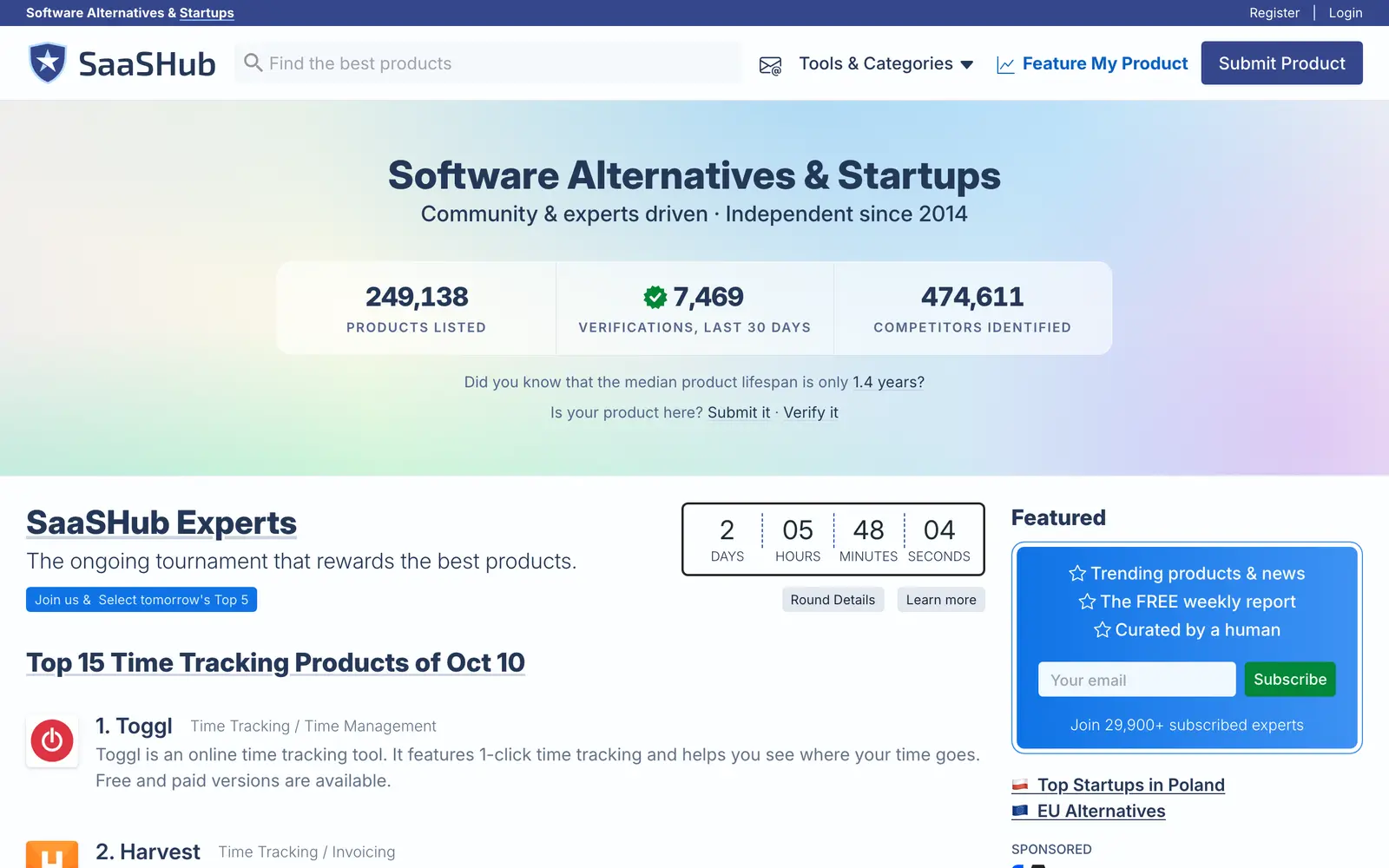
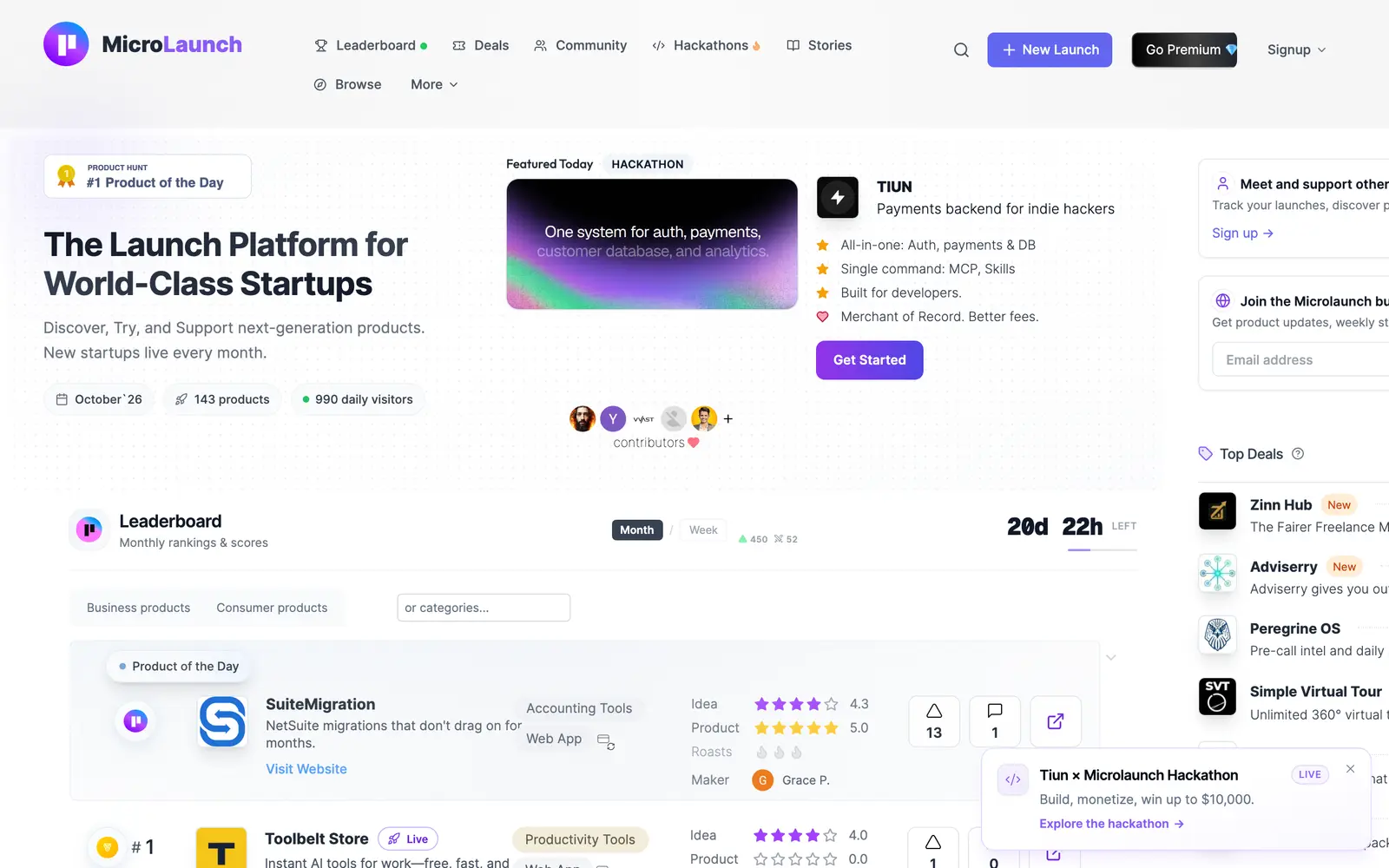
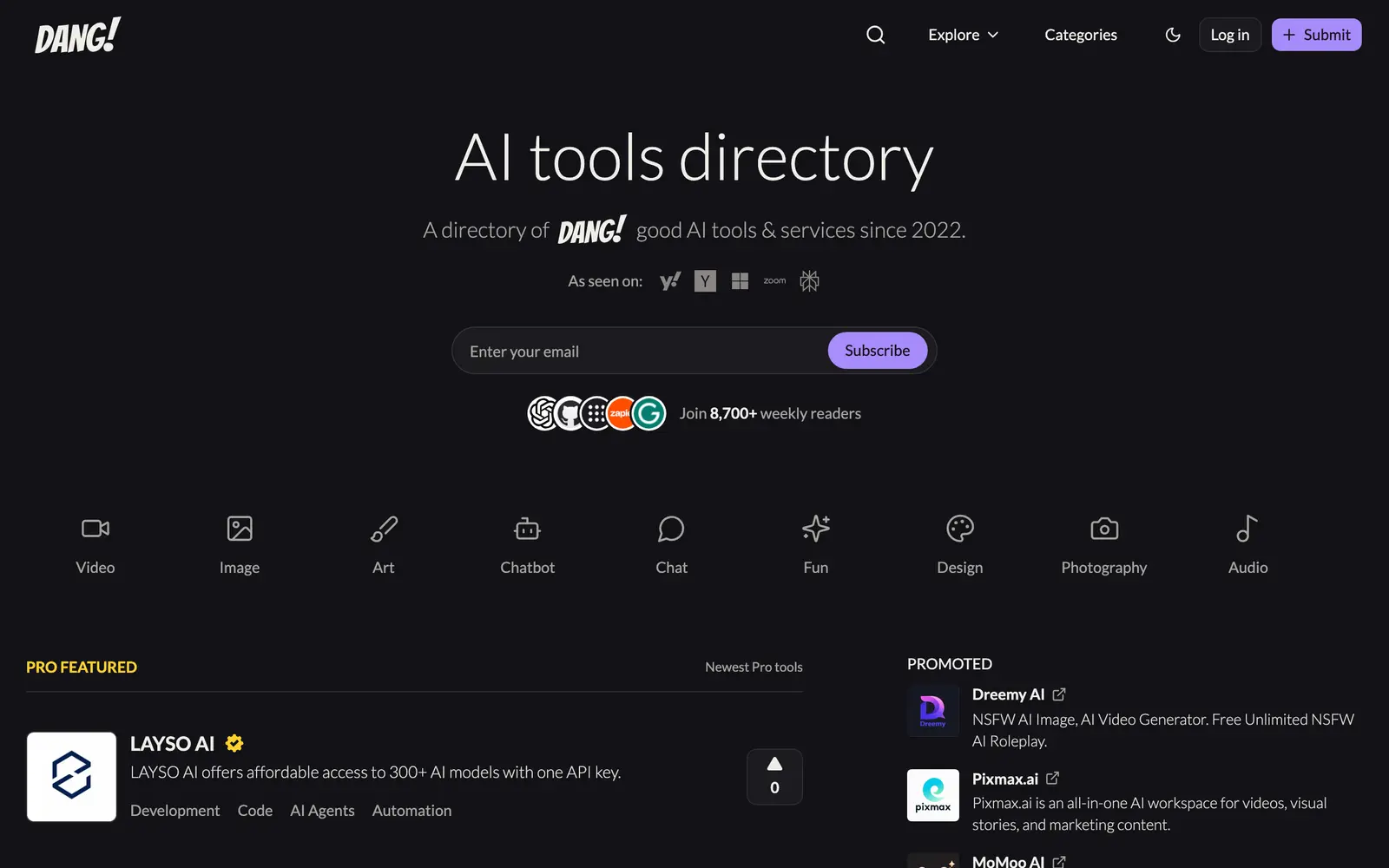
State of AI directories, October 2026: 110 places, by the numbers
110 AI directories and launch sites checked on October 10, 2026: who still lists for free, what a badge buys, median prices, queues, links and closures.
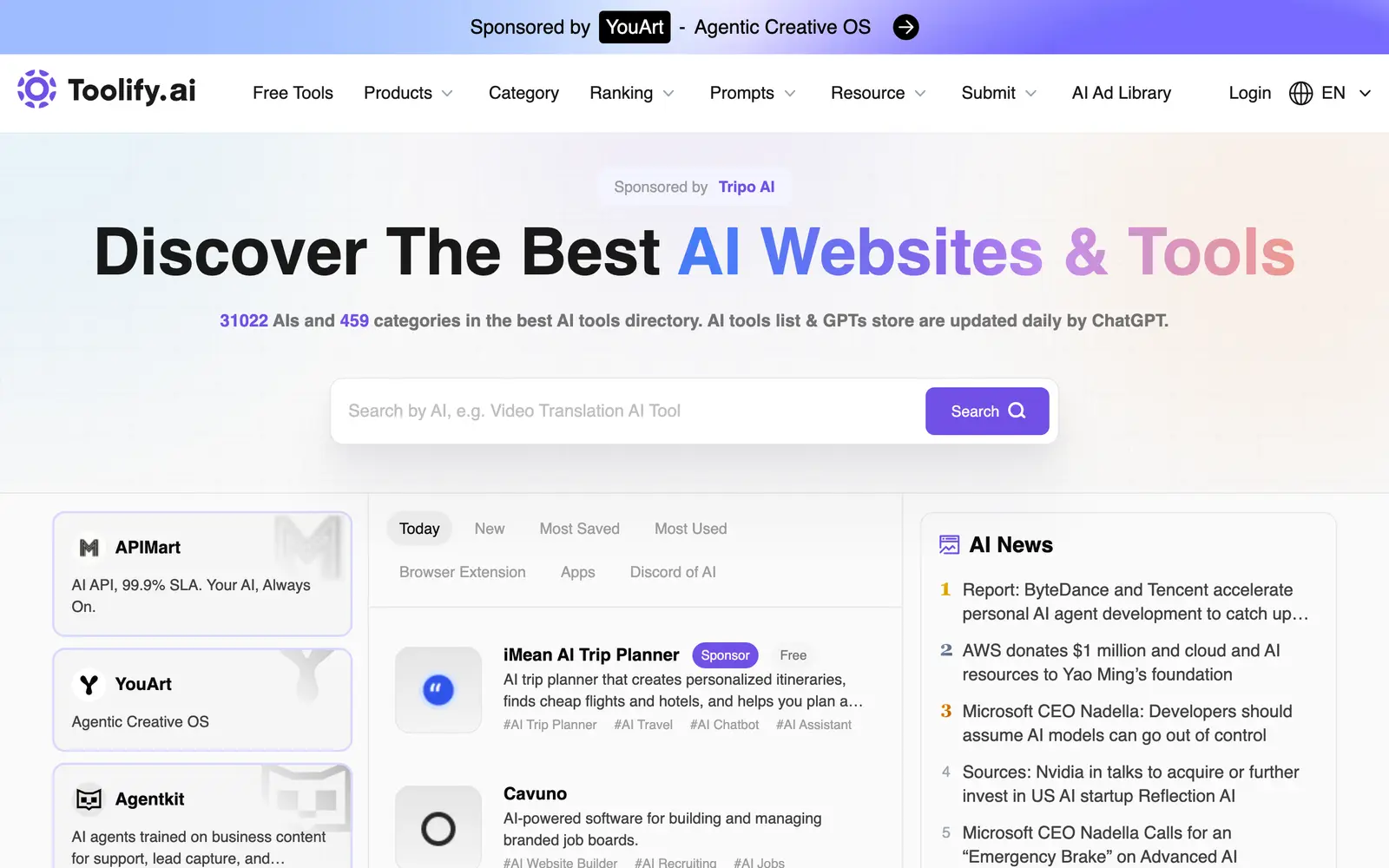

Do AI directory backlinks help SEO? Nofollow, sponsored and dofollow explained
What nofollow, sponsored and ugc mean, what Google says about paid links, and what 97 directories serve in their link tags. Checked October 10, 2026.