
Instinct hits a $10B valuation in a week of AI agent rounds
Instinct raised $1B at $10B a month after its last round; EliseAI doubled to $4B; Ema and Modulate closed rounds; OpenAI is reportedly raising $30B.
On this page7 sections
The largest closed round of the week went to a consumer agent that has been open, by invitation only, since August. The rest of the list reads the same way: the money is going to software that finishes a job — books the table, files the ticket, answers the tenant — rather than software that drafts something for a person to finish.
| Company | Raised | Round | Valuation | Named investors | What it does |
|---|---|---|---|---|---|
| Instinct | $1B | Series C | $10B | Sequoia, Benchmark, Coatue | Personal agent that books, buys, cancels and calls |
| EliseAI | $350M | — | $4B | Andreessen Horowitz, Bessemer (co-leads) | Automates admin work for housing and healthcare operators |
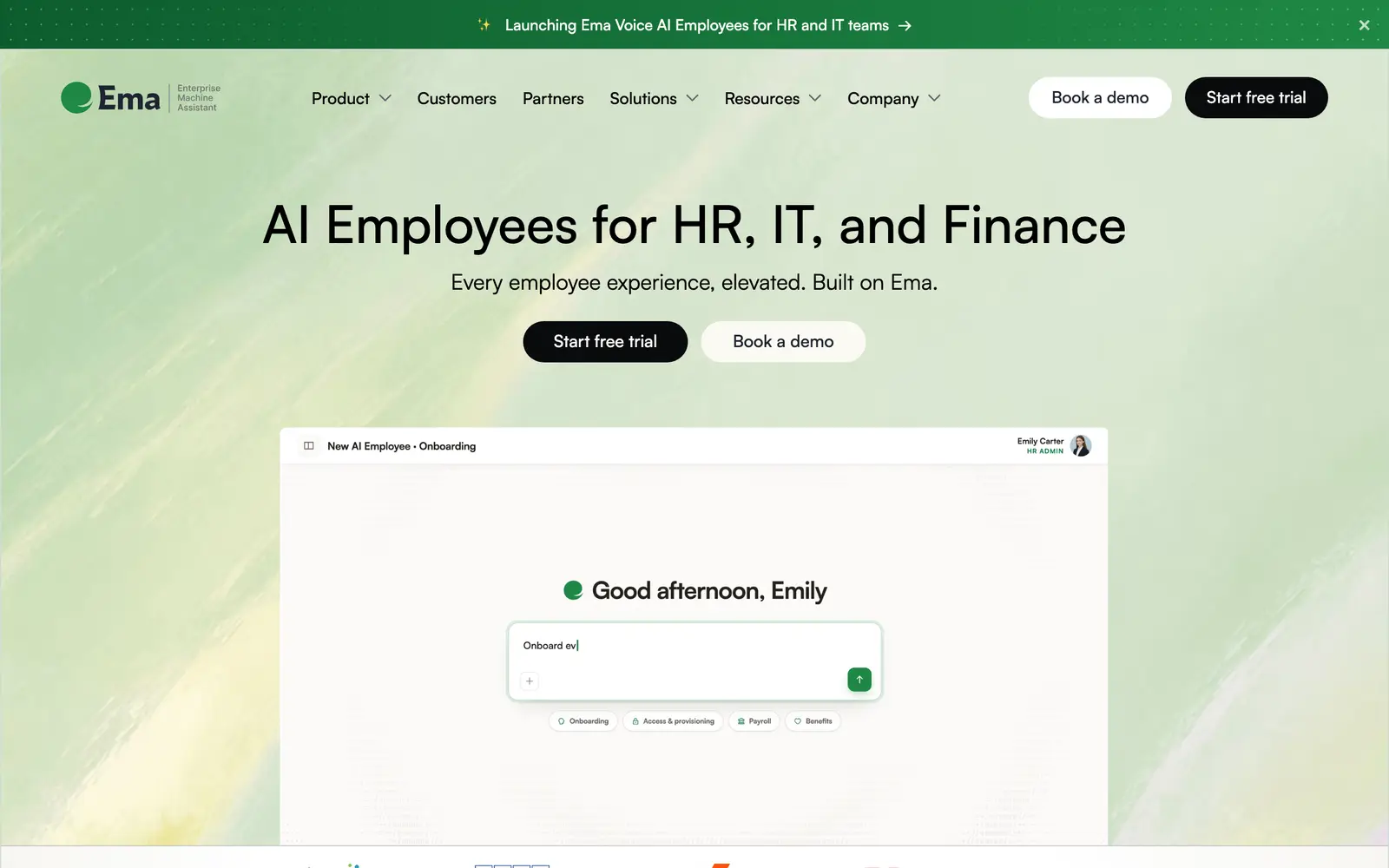
| Ema | $77M | Series B | — | Creaegis (lead), Accel, Section 32, Prosus | Teams of agents running HR, IT and finance processes |
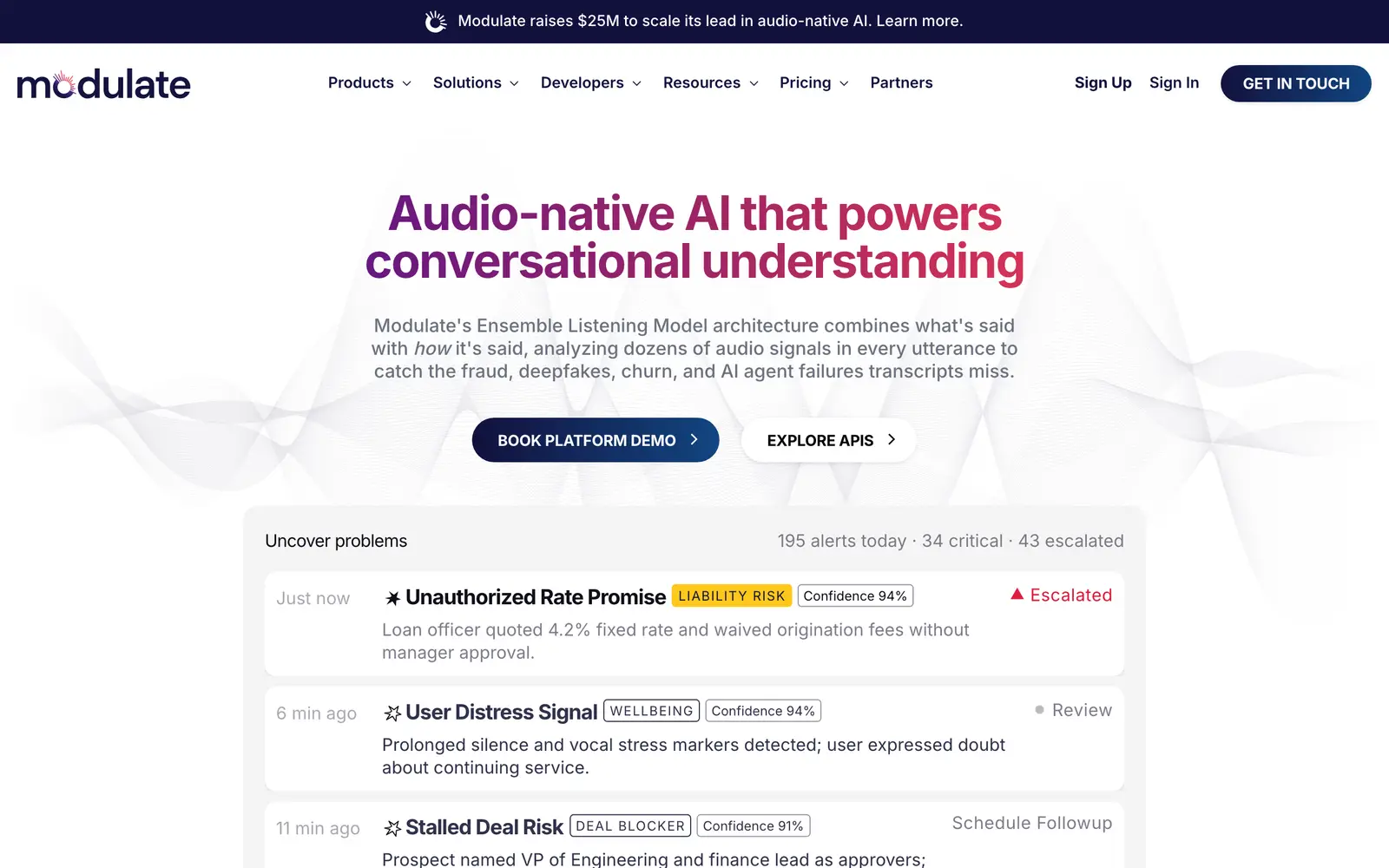
| Modulate | $25M | — | — | Future Ventures (lead), Hyperplane, Lakestar | Voice intelligence and deepfake detection |
Figures as reported by TechCrunch; a dash means the report did not give one.
- Instinct$1,000M
- EliseAI$350M
- Ema$77M
- Modulate$25M
Instinct: four times the valuation in a month
Instinct's $1 billion Series C values the company at $10 billion, TechCrunch reported on 28 September — four times the $2.5 billion it was valued at in August. The product is a personal agent that runs errands end to end: travel and restaurant bookings, purchases, bills, subscription cancellations, research, groceries. A recent "concierge" feature places phone calls to businesses that do not take bookings online.
Two things the round does not come with. The company has not shared user numbers, and the service is young — it launched in August and is still invite-only. TechCrunch has also reported on how far the first version of its privacy policy reached; the policy has since been updated. An agent that pays your bills needs access to the accounts it pays from, and that trade is worth reading before signing up.
EliseAI and Ema: agents in the back office
EliseAI raised $350 million at a $4 billion valuation, double its previous one, in a round co-led by Andreessen Horowitz and Bessemer. It automates administrative and operational work for housing and healthcare companies, and passed $200 million in annual recurring revenue this summer, according to TechCrunch.
Ema's $77 million Series B, led by the Bengaluru firm Creaegis, funds the same idea for corporate functions: several agents coordinating one multi-step process in HR, IT or finance, through the applications a company already runs. Ema told TechCrunch it has more than 50 enterprise customers and net dollar retention of about 180%. Both figures are the company's own.
Modulate: a check on voice agents
Modulate raised $25 million, led by Future Ventures, for a suite of more than 100 voice models: transcription, emotional analysis, synthetic-voice and deepfake detection, AI-music detection, and monitoring of what voice agents say in regulated industries. It is the other half of the agent boom. As more calls are placed by software, someone has to check what the software said.
OpenAI, reportedly: $30 billion at about $1.4 trillion
Bloomberg reported, and TechCrunch followed on 29 September, that OpenAI is in talks to raise at least $30 billion at a valuation of roughly $1.4 trillion. Its last round closed in March at $852 billion. OpenAI's chief executive has ruled out a public listing this year, and TechCrunch describes the round as a bridge to a listing planned for 2027. The round is not closed, and the figures are reported rather than announced by the company.
Also this week: Manus 2.0
Not a round, but the launch closest to the catalog. Manus shipped version 2.0 of its agent on 28 September on a new harness it calls Cascade, alongside a Cloud Computer for persistent projects, event-triggered Automations, a desktop Manus Studio and Cue, a standalone app for personal agents that is in early access.
Manus says Cascade used 23.2% fewer tokens, finished tasks in 28.2% less time and cost 32% less to run than its previous system — "in one tested configuration", with no detail on what the tasks were. Treat the three numbers as a direction, not a benchmark.
Manus
55Autonomous agent that runs tasks in its own sandbox
Why a catalog watches funding
Funding says nothing about whether a tool works today, and it is not an input to any score on this site — the methodology page lists every signal that is. What a large round does predict is change: new tiers, new limits, a rebrand, sometimes an acquisition. Those are the things a listing gets re-checked for.
Sources
- TechCrunch — Viral AI agent Instinct raises $1B Series C at a $10B valuation
- TechCrunch — a16z-backed EliseAI raises $350M, doubles valuation to $4B
- TechCrunch — Ema raises $77M as AI starts eating into enterprise software and services
- TechCrunch — Modulate raises $25M for its voice models and analysis suite
- TechCrunch — OpenAI reportedly in talks to raise $30B round at $1.4T valuation
- Manus — Introducing Manus 2.0
FundingStartupsAI agentsNews
Every tool named here has a live catalog page — price, status and when we last checked it.
Browse the catalogFollow new posts via the RSS feed.
Keep reading
All posts →State of AI tools, October 2026: 3,264 tools, by the numbers
3,264 AI tools counted on October 13, 2026: domain ages, .ai against .com, how they charge, median prices by category, platforms, countries and shutdowns.

State of AI directories, October 2026: 110 places, by the numbers
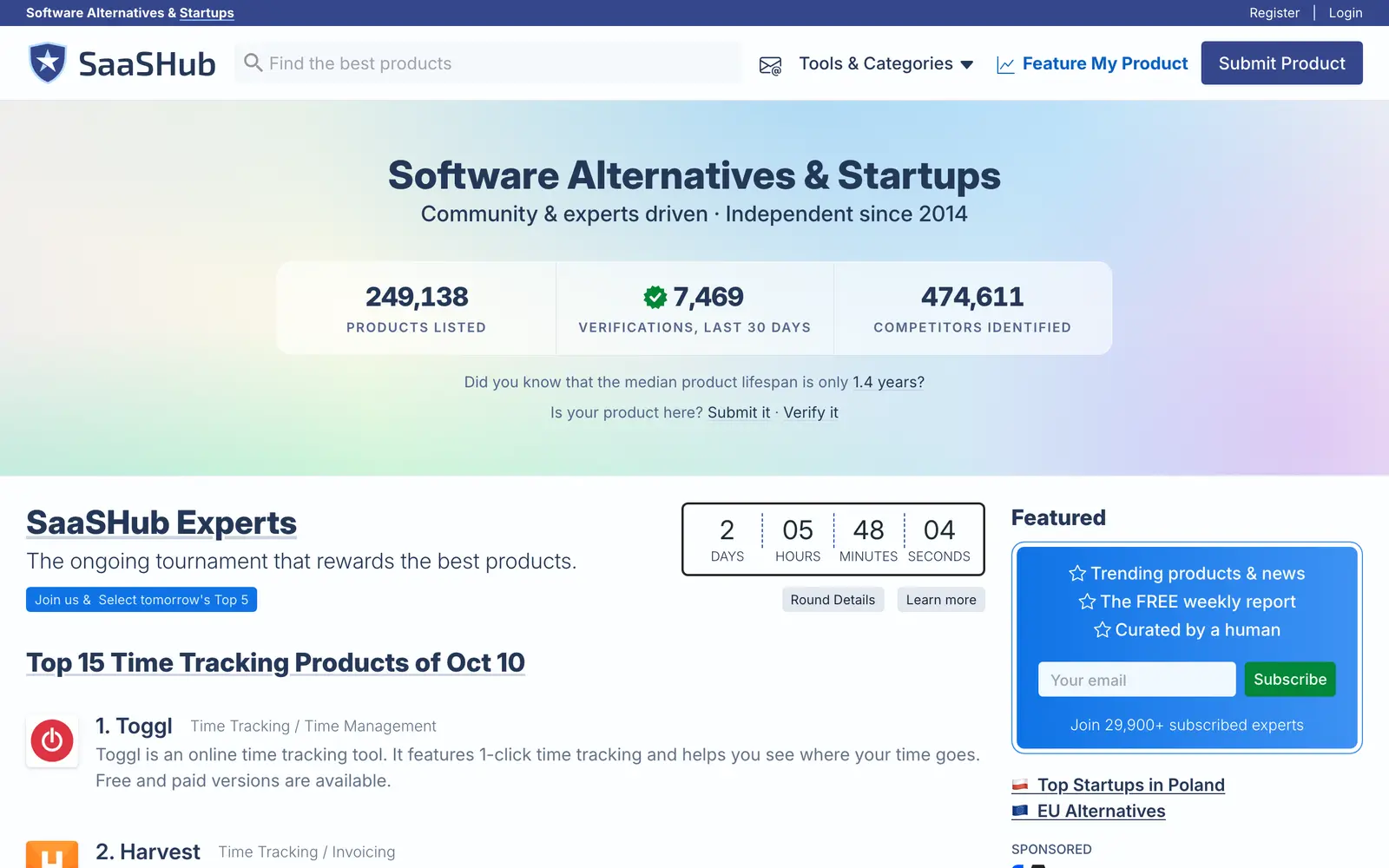
110 AI directories and launch sites checked on October 10, 2026: who still lists for free, what a badge buys, median prices, queues, links and closures.


Do AI directory backlinks help SEO? Nofollow, sponsored and dofollow explained
What nofollow, sponsored and ugc mean, what Google says about paid links, and what 97 directories serve in their link tags. Checked October 10, 2026.